
Last updated November 21, 2026
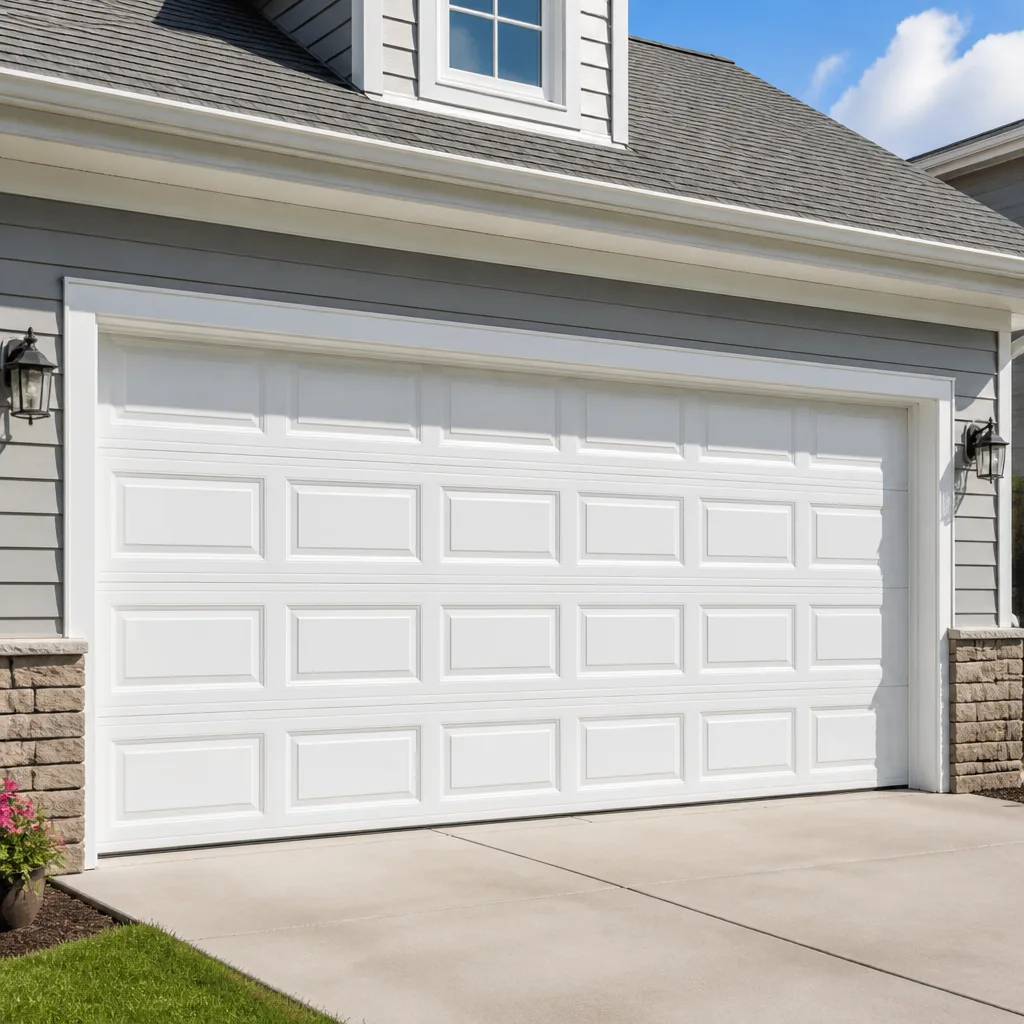 Raised-panel steel
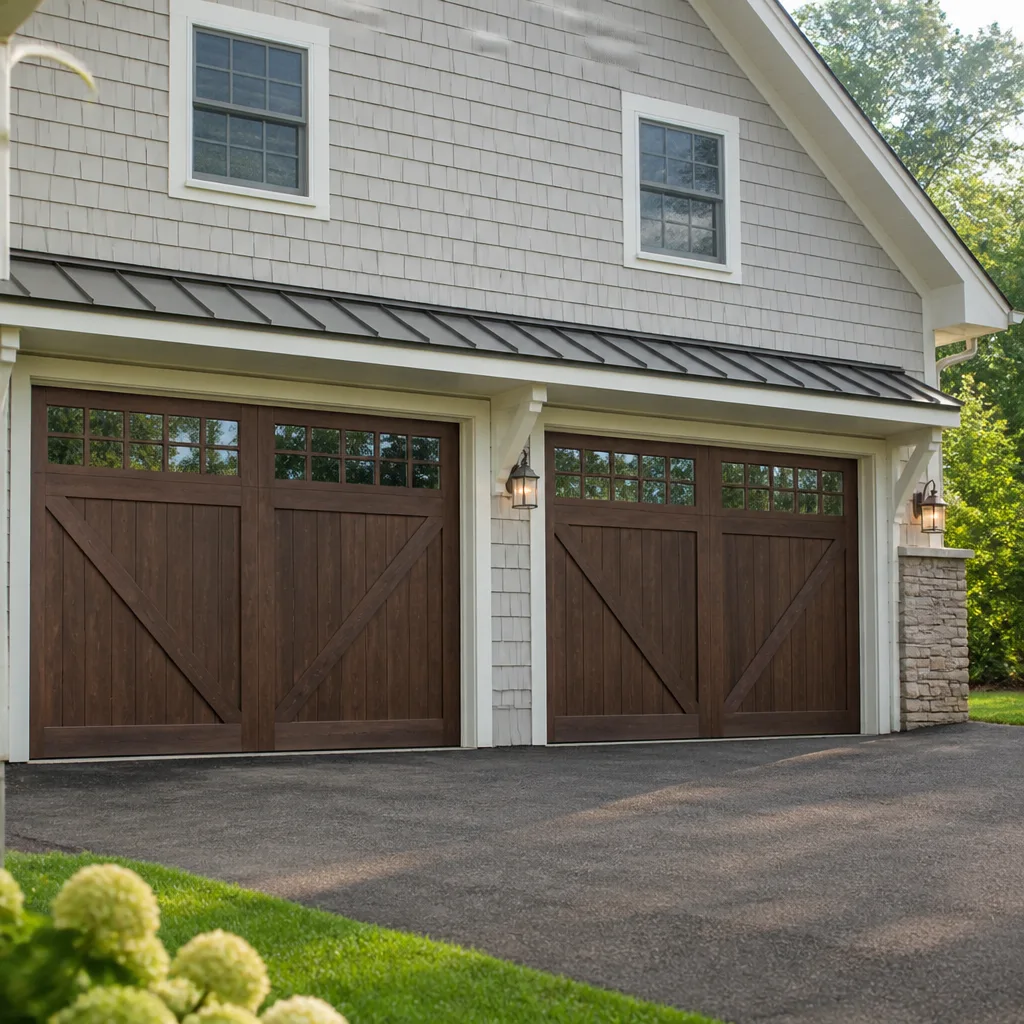 Carriage house
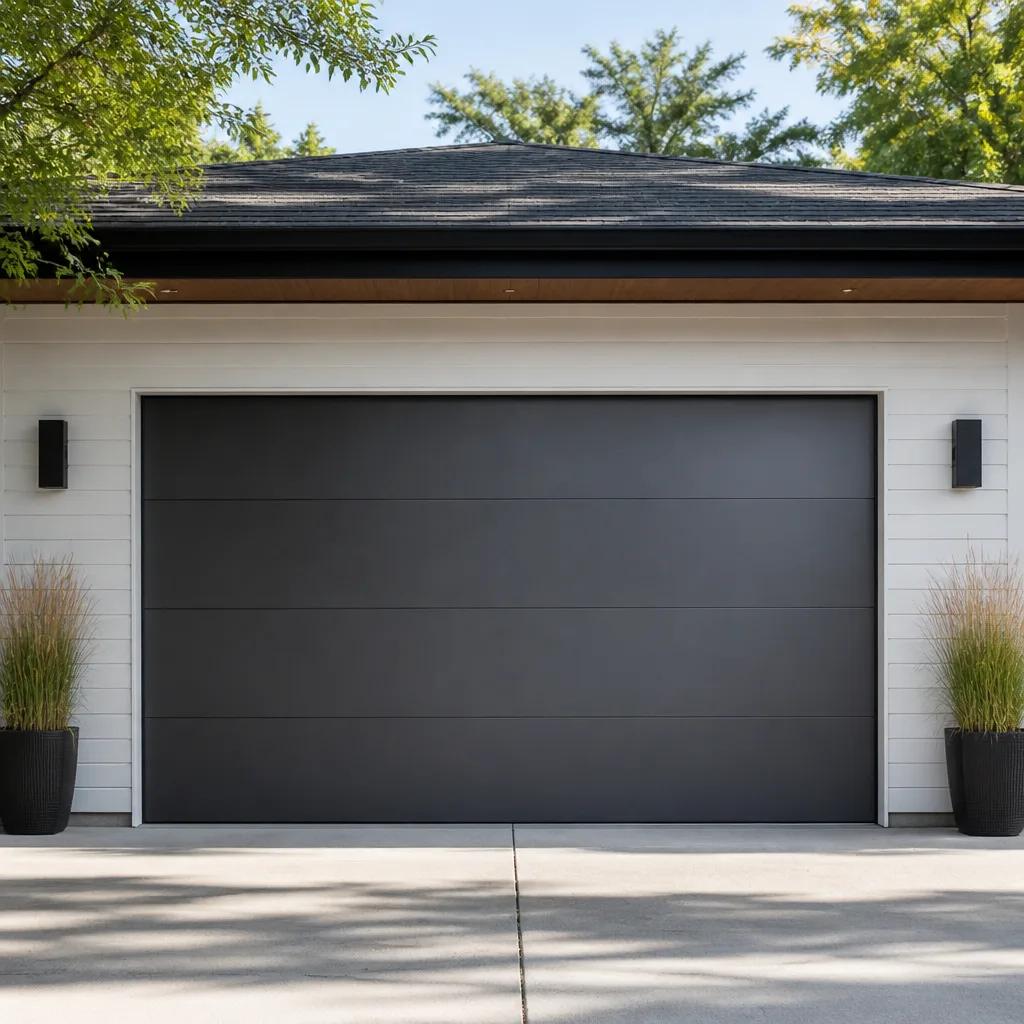 Modern flush
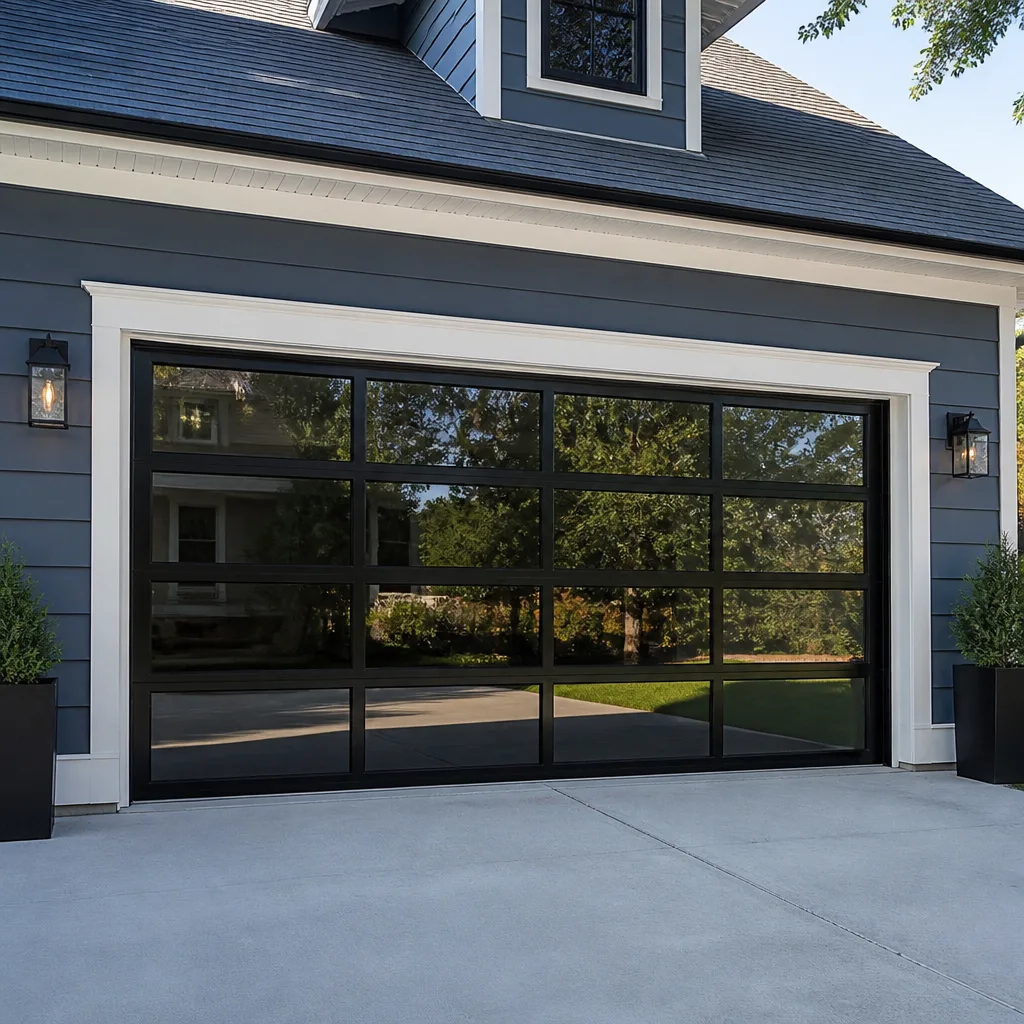 Full-view glass
 LiftMaster openers
 Chamberlain openers
Full 25-point door and opener safety check with every visit - springs, cables, rollers, tracks, and your LiftMaster or Chamberlain opener included
You get a price before we start. It does not change when the pro arrives.
Get your free estimateSeasonal Garage Door Care for Wesley Chapel: Year-Round Homeowner’s Guide
Most seasonal garage door guides were written for a place with four proper seasons, and following one here means doing the wrong work at the wrong time. A northern calendar tells you to prep your springs in early spring, right when Wesley Chapel doors are already carrying their heaviest thermal load of the year. It tells you to winterize for cold that never arrives while ignoring the humidity that actually does the damage. Wesley Chapel doesn’t run on four classic seasons. It runs on four distinct stress periods, and each one asks something different of your door.
This guide lays out a Florida-specific maintenance calendar built around hurricane prep, peak heat, rainy season, and the mild but shifty winter. You’ll learn what to check, when to check it, and which jobs belong to a trained technician.
Quick Answer
Garage door care in Wesley Chapel follows four periods tied to local weather rather than the northern calendar: pre-hurricane prep in April and May, peak heat checks in June through August, humidity and moisture management through the rainy season from July into September, and a hardware and balance check in the mild winter from December through February. The single most important habit is an inspection before each period starts, not after something fails.
Styles & brands we work with
- Raised-panel steel
- Carriage house
- Modern flush
- Full-view glass
- LiftMaster openers
- Chamberlain openers
Table of Contents
- Why a Northern Maintenance Calendar Fails in Wesley Chapel
- The Four-Period Wesley Chapel Garage Door Calendar
- Pre-Hurricane Season (April-May): What Prep Actually Means
- Peak Heat (June-August): Thermal Stress and What to Watch
- Rainy Season Humidity (July-September): Seals, Tracks, and Sensors
- Winter Hardware Check (December-February): Why Mild Weather Stresses Springs Most
- After a Named Storm: The Inspection Sequence Before You Operate the Door
- Monthly Habits That Cost Nothing
Why a Northern Maintenance Calendar Fails in Wesley Chapel
A garage door is a mechanical system with a handful of parts that react to temperature, moisture, and wind. The parts themselves don’t change from state to state. What changes is the order and severity of the stresses they face. A guide built for a colder climate assumes the worst threat is a long deep freeze and the biggest maintenance priority is protecting against ice. Wesley Chapel never gets that freeze, so half of that advice is dead weight.
The bigger problem is timing. Spring tension, the force stored in those coiled steel springs above the door, shifts with temperature. Heat expands metal and humidity changes how freely the door moves on its tracks. In a northern climate, spring months are stable and cool, which makes them a safe window for adjusting a door. In Wesley Chapel, April and May are already warming fast and June arrives hot. Doing “spring prep” in the northern sense here means working on a door in the middle of rising thermal stress.
Then there’s the rain. A northern guide might tell you to check your threshold seal before winter snowmelt. Here, water arrives in sheets during the summer rainy season and finds every gap in the door’s weatherstripping, the tracks, and the sensor housings. Moisture management is a summer job in Wesley Chapel, not a winter one.
And hurricanes override everything. Wind load, bracing, and post-storm inspection matter here in a way they simply don’t in most of the country. A homeowner in Wesley Chapel who follows a generic seasonal guide will spend time on the wrong tasks and skip the ones that protect the house. The fix is a calendar that matches the climate, and that’s what the rest of this guide gives you.
The Four-Period Wesley Chapel Garage Door Calendar
Here’s the full year at a glance. Think of it as four stress periods, each with its own focus, rather than four seasons. Some overlap in the hottest, wettest stretch, and that’s fine. The point is to be ahead of each period, not reacting in the middle of one.
| Period | Months | Main Focus | Key Tasks |
|---|---|---|---|
| Pre-hurricane prep | April-May | Storm readiness | Check wind-load rating, inspect bracing, test manual release, secure tracks |
| Peak heat | June-August | Thermal stress | Watch spring tension, listen for new noises, keep tracks clean and lubed |
| Rainy season humidity | July-September | Moisture management | Inspect threshold seal, clear track drainage, check sensor housings |
| Winter hardware check | December-February | Balance and hardware | Balance test, tighten bolts, test safety reverse, inspect rollers |
That’s the skeleton. Now the detail, period by period, with the specific tasks that matter most in Wesley Chapel’s heat, humidity, and storm exposure. Each section stands on its own, so you can jump to whichever period you’re facing right now.
Pre-Hurricane Season (April-May): What Prep Actually Means
Hurricane prep for a garage door is not the same as boarding up a window. The garage door is usually the largest opening in the house, and how it performs in high wind determines whether wind pressure gets inside. That’s why the first thing to know is your door’s wind-load rating. It’s typically a label or sticker on the door panel or the track, and it tells you the wind speed the door was tested and rated to withstand. If you can’t find it, a technician can help identify it.
Here’s what to handle in April and May, before the season’s first serious system forms:
- Find your wind-load rating. Locate the sticker or label. If the door has no rating or you can’t find documentation, that’s worth knowing before a storm, not during one.
- Inspect the bracing and reinforcement. Some doors are built with or fitted with reinforcement that helps them resist wind pressure. Check that any bracing is intact, fastened, and not bent or corroded.
- Test the manual release. Pull the red release handle with the door closed, then re-engage it. You want to know it works and understand how it works before you need it in a power outage.
- Check the tracks and mounting. Look for loose lag bolts where the track brackets meet the framing, and any track sections that have shifted. Loose hardware is a storm-readiness issue.
- Clear the door’s path. Anything stored against the door or track, inside or out, becomes a projectile or an obstruction in wind.
If your door isn’t rated for a named storm, that’s not a reason to panic, but it is a reason to plan. A wind-rated door or a reinforcement kit designed for your door model is the real answer, and it’s a conversation to have in spring, well before a storm is on the radar. For doors that need repair before the season, our garage door repair team can inspect the door, tracks, and hardware and tell you where it stands.
One practical note for Wesley Chapel homeowners in flood-prone low spots: your garage door’s bottom seal is also your first line against water intrusion during a heavy rain, and we’ll get to that in the rainy season section. April and May are the right time to fix it, not July.
Peak Heat (June-August): Thermal Stress and What to Watch
Heat does two things to a garage door system. It expands the metal in the tracks and panels, and it changes the tension in the springs. On a hot afternoon, a door that ran smoothly in March can start to feel stiff, drag, or make new noises. None of this means the door is failing. It means the system is under its heaviest thermal load, and that’s the time to watch closely rather than make big adjustments.
What to watch through the peak heat months:
- New or changing noises. A creak that appears in June and disappears in October is thermal. A grinding or snapping sound that stays is mechanical and needs a look.
- Sluggish operation. If the door hesitates, moves unevenly, or the opener strains, the door may be out of balance. Don’t force it.
- Track alignment. Heat expansion can shift a track slightly. Check that the door runs centered and doesn’t rub on either side.
- Roller condition. Heat and friction wear rollers faster. Worn nylon or steel rollers make the door louder and harder on the opener.
What not to do in peak heat is the important part. Don’t try to adjust spring tension yourself. The springs above your door are under extreme tension even when the door is down, and the winding process is one of the most dangerous jobs in home maintenance. A trained technician uses the right winding bars and knows how to release and reset the tension safely. This is a job for a professional, full stop. Our garage door spring repair service exists for exactly this, and our technicians have up to 8 years of experience working with the actual components of the systems installed in Wesley Chapel homes.
For the door’s moving parts, a light application of a garage-door-rated lubricant on the hinges, rollers, and the torsion bar bearings (never on the tracks themselves) can quiet things down and reduce wear. Keep the tracks clean and dry, and leave the springs alone.
Rainy Season Humidity (July-September): Seals, Tracks, and Sensors
The summer rainy season in Wesley Chapel brings near-daily afternoon storms and long stretches of high humidity. For a garage door, that means water and moisture have more ways in than most homeowners realize, and the damage is usually slow and quiet until it isn’t. This is the period when the small maintenance tasks pay off most.
The threshold seal is the rubber strip along the bottom of the door. It’s the part that meets the floor when the door closes, and it’s the first thing to check:
- Inspect the bottom seal for gaps, cracks, and flattening. A worn seal lets water run under the door and into the garage, and it also lets in pests and hot air.
- Check the seal’s contact across the full width. Close the door and look for daylight or water staining at any point along the floor line. Low spots in the slab are common and show up as a gap in one area.
- Clear the track drainage. Small drain holes in the bottom track can clog with debris. Clear them so water doesn’t pool in the track and rust the rollers.
- Inspect the sensor housings. The safety sensors near the floor sit right where splashing rain and humidity collect. Check the housings for moisture, condensation, or corrosion on the contacts, which can cause intermittent sensor faults.
The opener is worth attention in this period too. Modern units from LiftMaster and Chamberlain, along with Genie and Craftsman models, have circuit boards and in some cases Wi-Fi modules that don’t love damp conditions. If your opener starts behaving erratically during the rainy season (opening on its own, losing its travel limits, or dropping its Wi-Fi connection), moisture in the housing or a failing logic board is a likely culprit. Our garage door opener repair specialists diagnose by brand and model, which matters because the fix differs from one system to the next.
Don’t overlook the door’s weatherstripping around the sides and top. It’s easy to check by hand: run a hand along the frame inside the closed door and feel for drafts or gaps. Replacing worn weatherstripping is a small job that keeps the rainy season out of your garage.
Winter Hardware Check (December-February): Why Mild Weather Stresses Springs Most
Here’s the counterintuitive part, and it’s the piece most guides get wrong. The biggest seasonal threat to your springs isn’t summer heat. It’s the daily temperature swing in January and February. Wesley Chapel winters are mild, but they’re variable: a warm afternoon can drop into a chilly night, and back again. Each swing cycles the metal in the springs through expansion and contraction. Over a winter, that repeated cycling puts real wear on the springs and the door’s balance, and it happens quietly.
That makes winter the right time for a careful hardware and balance check, not a heavy adjustment. What to do:
- Balance test. With the door closed, pull the manual release, then lift the door by hand to about halfway and let go. A balanced door should stay roughly where you put it. If it drops or rises on its own, the springs need attention from a technician.
- Tighten the hardware. Check and snug the bolts on the hinges, the brackets holding the track, and the brackets on the door itself. Vibration loosens them over time.
- Test the safety reverse. Put a piece of wood or a box in the door’s path and close it. The door should reverse on contact. Also test the safety sensors that stop the door when something breaks the beam near the floor.
- Inspect the rollers and hinges. Look for flat spots, cracks, and excessive play. Worn rollers make the door work harder all year.
- Look at the spring condition. Visible gaps, rust, or a stretched look on a spring is a signal to stop using the door and get a professional assessment.
A door that fails the balance test or shows a damaged spring is one to leave alone. The spring holds the door’s weight; a failing one can snap with enough force to cause serious injury, which is why spring repair is a dedicated skill and not a weekend project. If your door is a Clopay, Amarr, or Wayne Dalton, we’re familiar with how those systems are built and can diagnose the right fix rather than guessing at a generic replacement. Whatever the system, the decision to repair comes before the parts, and that’s the order we work in.
After a Named Storm: The Inspection Sequence Before You Operate the Door
After a named storm passes, the instinct is to hit the button and see if the door works. Don’t. A door that may have shifted, taken on water, or had debris driven against it needs a visual inspection first, in a specific order. Running it blind can turn a fixable problem into a bigger one, or cause injury if something has come loose.
Follow this sequence before you operate the door:
- Stand back and look at the whole door. Is it sitting square in the opening? Are any panels bent, dented, or out of line? Is the door still attached to its tracks?
- Check for debris. Look along the tracks, under the door, and around the threshold for branches, gravel, or anything that would block it.
- Inspect the tracks. Look for sections that have bent or pulled away from the wall. A bent track will bind the door and can snap a roller.
- Check the springs and cables. Look for a visible gap in a spring or a cable that’s come off its drum. If you see either, stop. Do not operate the door.
- Test the manual release. Only if the visual inspection is clean, disengage the opener and open the door by hand slowly to see if it runs smoothly.
- Check for water intrusion. Stain lines under the door and moisture around the opener housing tell you what the storm pushed in.
If anything looks off, don’t run the opener. Call for a professional assessment. Storm-related damage to a garage door system is exactly the kind of thing that can wait a day but not a week of repeated use, and the sooner it’s checked, the simpler the repair usually is.
Monthly Habits That Cost Nothing
Between the seasonal checks, a few minutes a month keeps small problems from becoming big ones. None of these take tools or money, and all of them are safe for any homeowner.
- Listen. Once a month, stand in the garage and operate the door. Note any new noise: a rattle, a grind, a snap.
- Look at the floor line. With the door closed, check for daylight under the bottom seal. Watermarks or a visible gap tell you the seal needs attention.
- Test the reverse and the sensors. Run the safety reverse test and break the sensor beam by hand to confirm the door stops. Do this once a month.
- Wipe down the tracks. A clean cloth removes grit that wears rollers. Don’t lubricate the tracks, since grease traps dirt.
- Check the opener’s lights and behavior. A flashing light pattern or a change in how the opener responds often signals a fault early.
- Clear the area around the door. Keep the door’s path clear inside and out so it never meets an obstruction.
These habits don’t replace the seasonal inspections or a technician’s eye, but they catch problems while they’re still small. Most doors give plenty of warning before they fail. A monthly walk-around means you’re the one who notices.
Common Mistakes to Avoid
- Doing “spring prep” in spring. In Wesley Chapel, April and May are already warming. Spring is for hurricane prep, not for making big adjustments to a door under rising thermal stress.
- Spraying lubricant on the tracks. Grease on the tracks attracts grit and makes the door work harder. Lubricate hinges, rollers, and bearings, and leave the tracks clean and dry.
- Ignoring the winter temperature swing. The mild back-and-forth in January and February cycles the springs more than the summer heat does. Check balance and hardware in winter.
- Skipping the threshold seal. A worn bottom seal lets in water all rainy season and is one of the cheapest fixes on the door. Check it in early summer, not after the garage floods.
- Running the door after a storm without inspecting it. If a track, panel, or spring has shifted, operating the door can make it worse. Inspect first, operate second.
- Trying to adjust spring tension yourself. The springs are under extreme tension and the job is genuinely dangerous. Leave spring work to a technician with the right tools.
- Assuming a wind rating you can’t confirm. If you can’t find the door’s wind-load rating, don’t assume it’s rated for a named storm. Find out before hurricane season, not during it.
See the difference
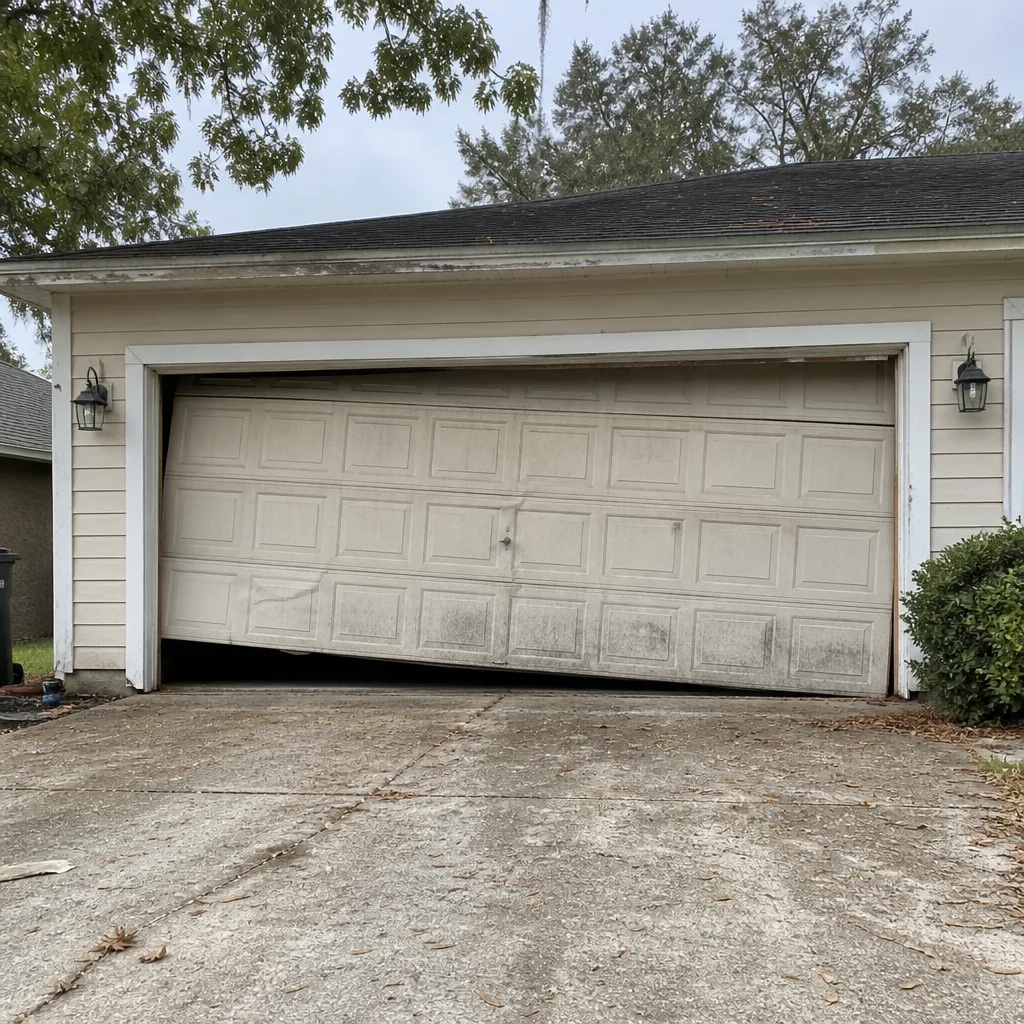 Before
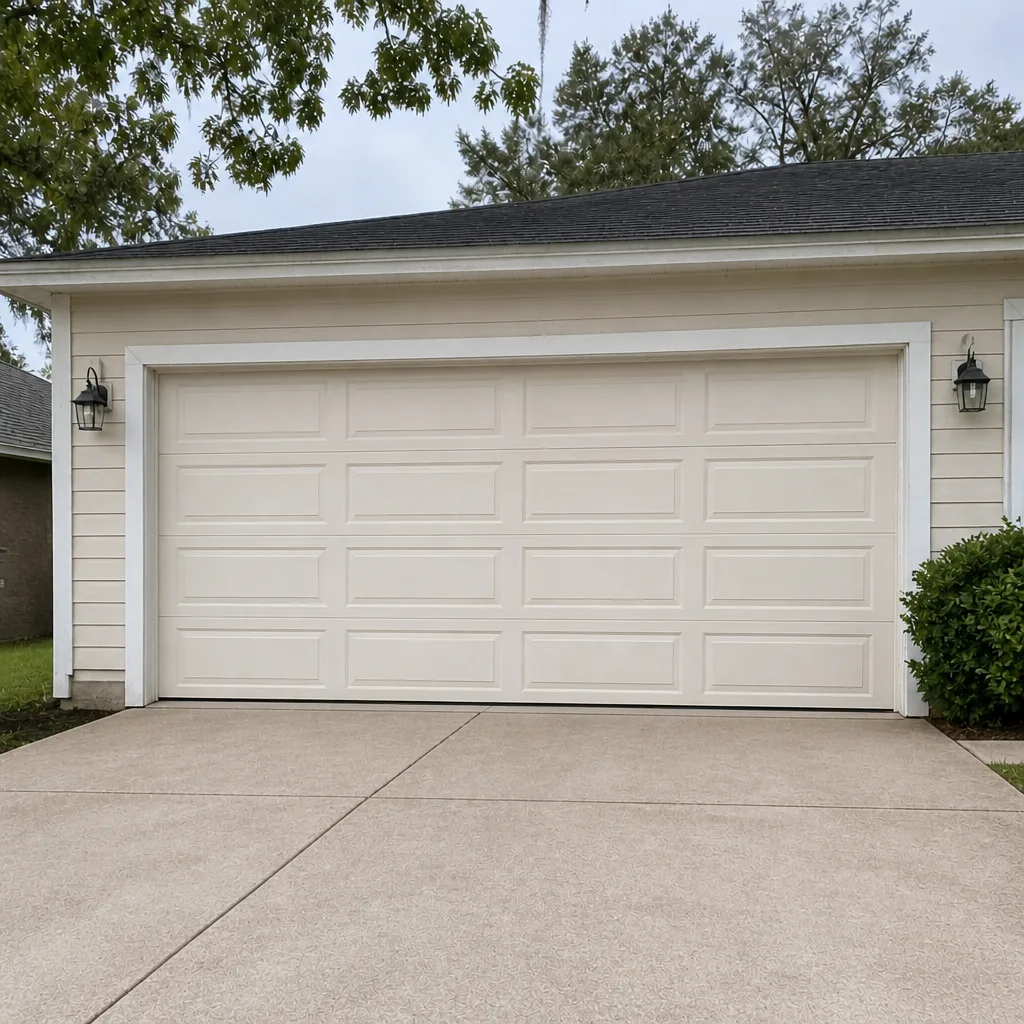 After
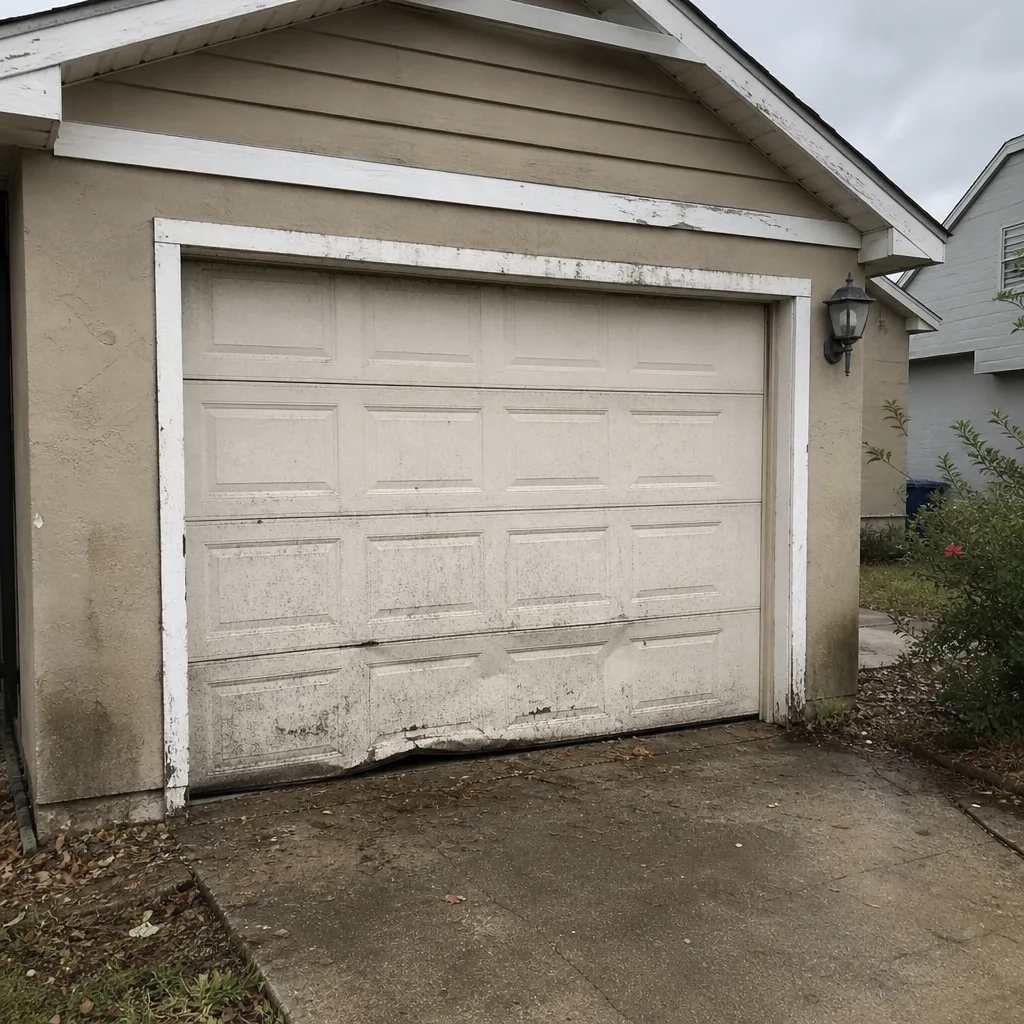 Before
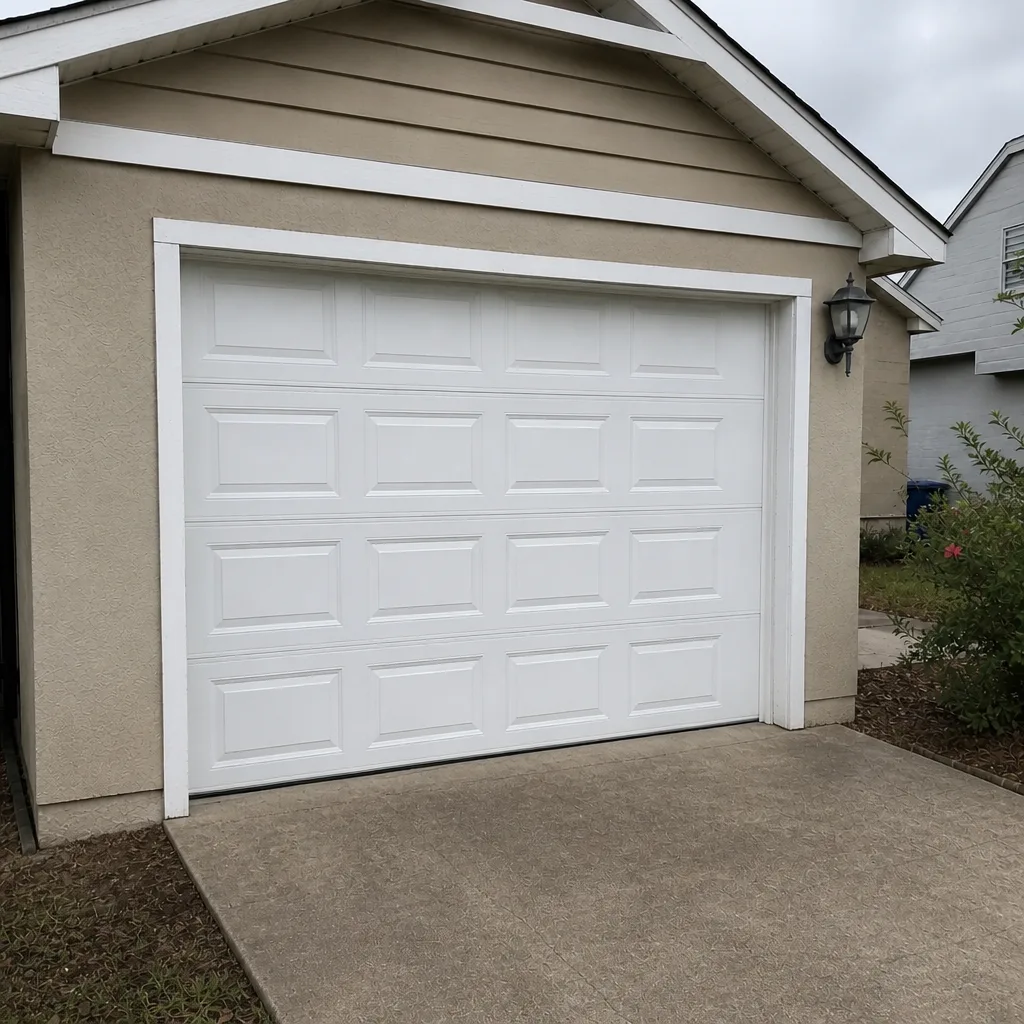 After
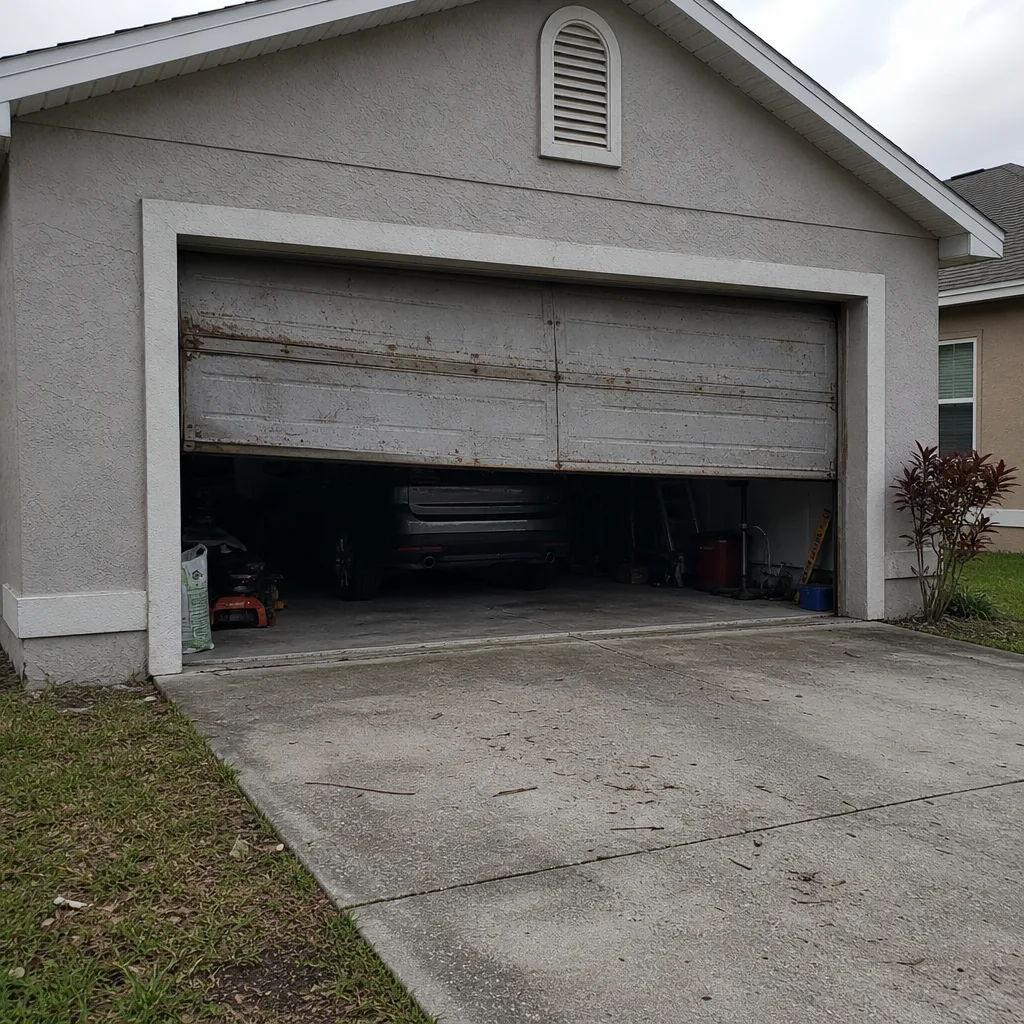 Before
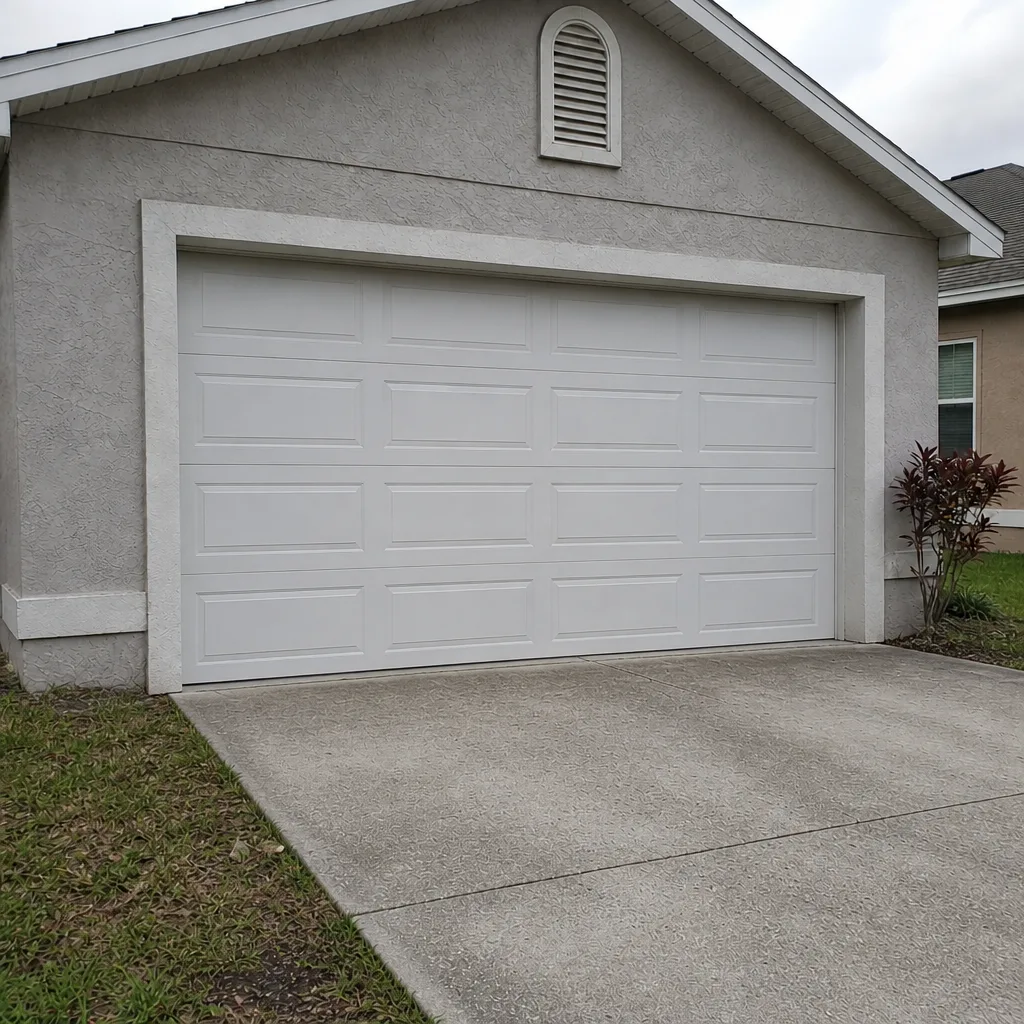 After
When to Call a Professional
Some jobs are homeowner tasks; others aren’t. Call a technician if you see a gap in a spring, a cable that’s come off, a door that fails the balance test, a track that’s bent or loose, an opener that reverses or loses its travel limits, or any damage after a storm. The same goes for a door that won’t close and stay shut, or one that’s become noticeably louder or harder to move. These aren’t signs to push through. They’re signals to stop and get an expert assessment before using the door again.
Wesley Chapel Garage Door Repair Co offers free estimates in Wesley Chapel, and our technicians have up to 8 years of experience diagnosing by brand and mechanism rather than swapping parts. Call (855) 337-1134 and we’ll help you figure out what your door needs.
Frequently Asked Questions
Break it into four periods rather than a single annual check: hurricane prep in April and May, peak heat checks in June through August, moisture management through the rainy season from July into September, and a hardware and balance check in the mild winter from December through February. An inspection before each period is the core habit. Call (855) 337-1134 for a free estimate if a check turns up something.
The mild winter stresses them more, because the daily temperature swings in January and February cycle the metal through repeated expansion and contraction. The summer heat does add thermal load, but the back-and-forth of a variable winter puts more wear on the springs. Call (855) 337-1134 for a free estimate if your door fails the balance test.
It means confirming your door’s wind-load rating, inspecting any bracing or reinforcement, testing the manual release, checking the tracks and mounting hardware, and clearing the door’s path. If the door isn’t rated for a named storm, that’s a spring conversation about a wind-rated door or a reinforcement kit, not a last-minute one. Call (855) 337-1134 for a free estimate on repair or reinforcement work.
Only after a visual inspection. Look at whether the door sits square, check for debris in the tracks, look for bent tracks and damaged springs or cables, and check for water intrusion. If anything looks off, don’t run the opener; call a professional. Call (855) 337-1134 for an assessment.
No. The springs above the door are under extreme tension even when the door is closed, and adjusting them is one of the most dangerous jobs in home maintenance. That’s work for a trained technician with the right tools. Our garage door spring repair service is built for exactly this, and our technicians have up to 8 years of experience. Call (855) 337-1134 for a free estimate.
Humidity and near-daily storms cause three common problems: a worn threshold seal lets water under the door, clogged track drainage pools water in the tracks, and moisture gets into the sensor housings. On the opener side, damp conditions can trigger intermittent electrical faults. Call (855) 337-1134 for a free estimate if your opener misbehaves during the wet months.
The Bottom Line
Wesley Chapel’s garage doors don’t follow a northern four-season calendar, and neither should your maintenance. The year splits into four stress periods: hurricane prep in spring, thermal stress in peak heat, moisture management through the rainy season, and a hardware and balance check in the variable winter. The single most useful habit is inspecting before each period starts. The single most destructive mistake is treating the dangerous jobs, especially anything involving the springs, as DIY work. Match the calendar to the climate, keep the small tasks small, and call a professional when a door fails the balance test, a spring shows damage, or a storm leaves you unsure. Wesley Chapel Garage Door Repair Co can help with repair, opener repair, spring repair, installation, and emergency service. Call (855) 337-1134 for a free estimate.
Written by the team at Wesley Chapel Garage Door Repair Co.