
Last updated November 21, 2026
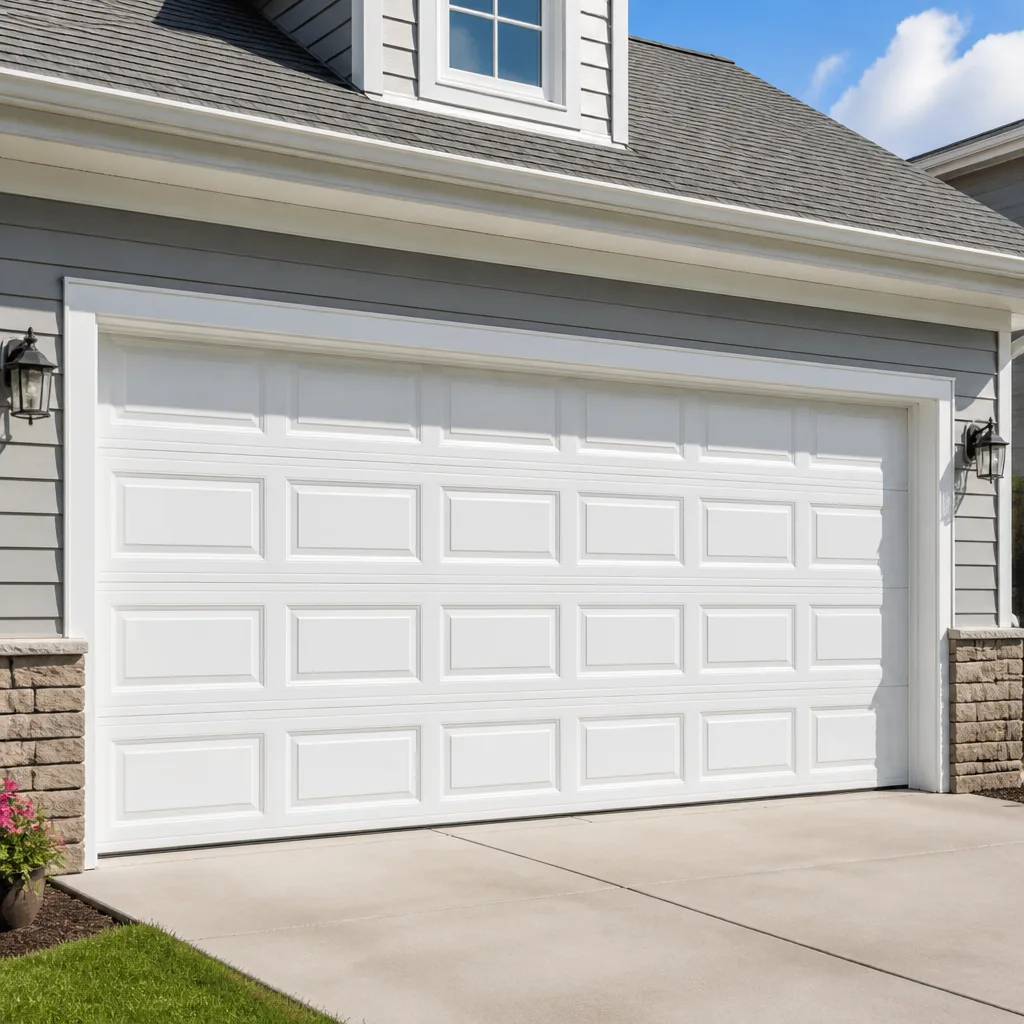 Raised-panel steel
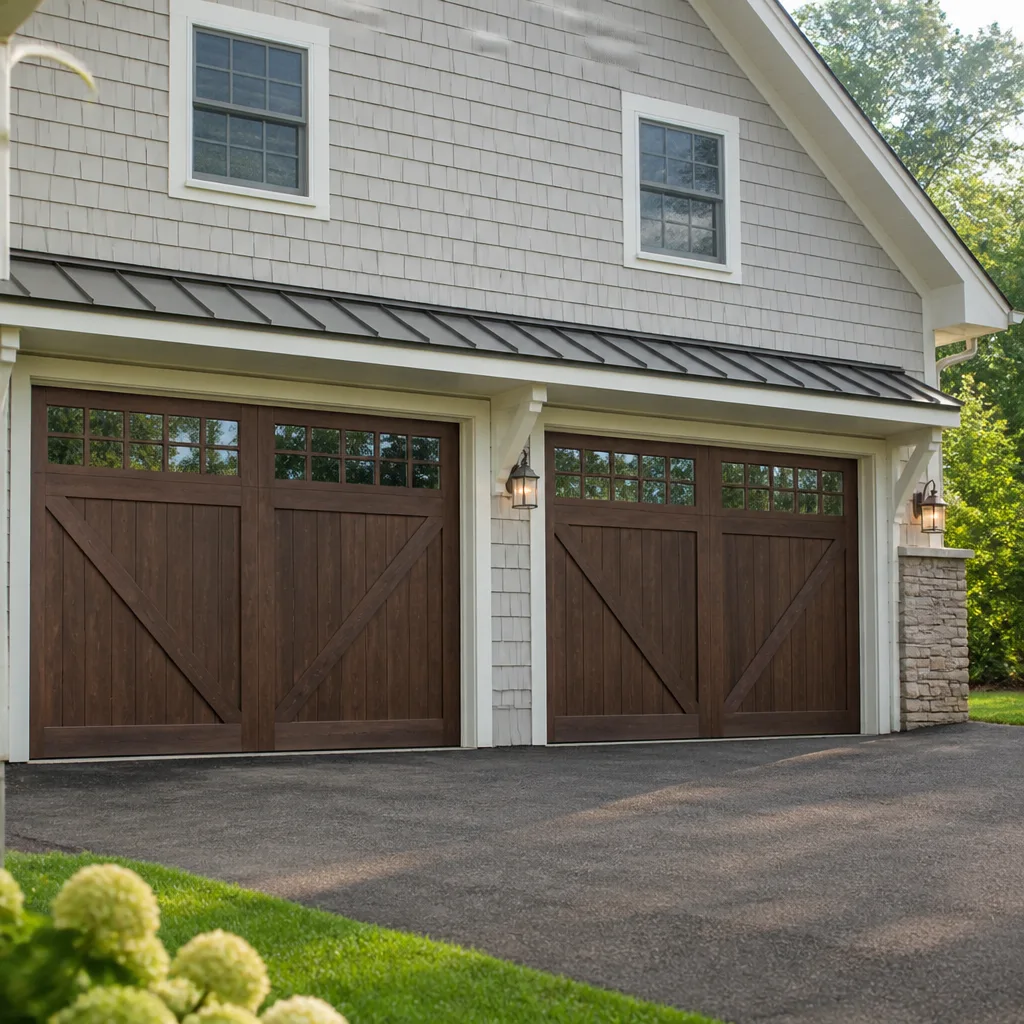 Carriage house
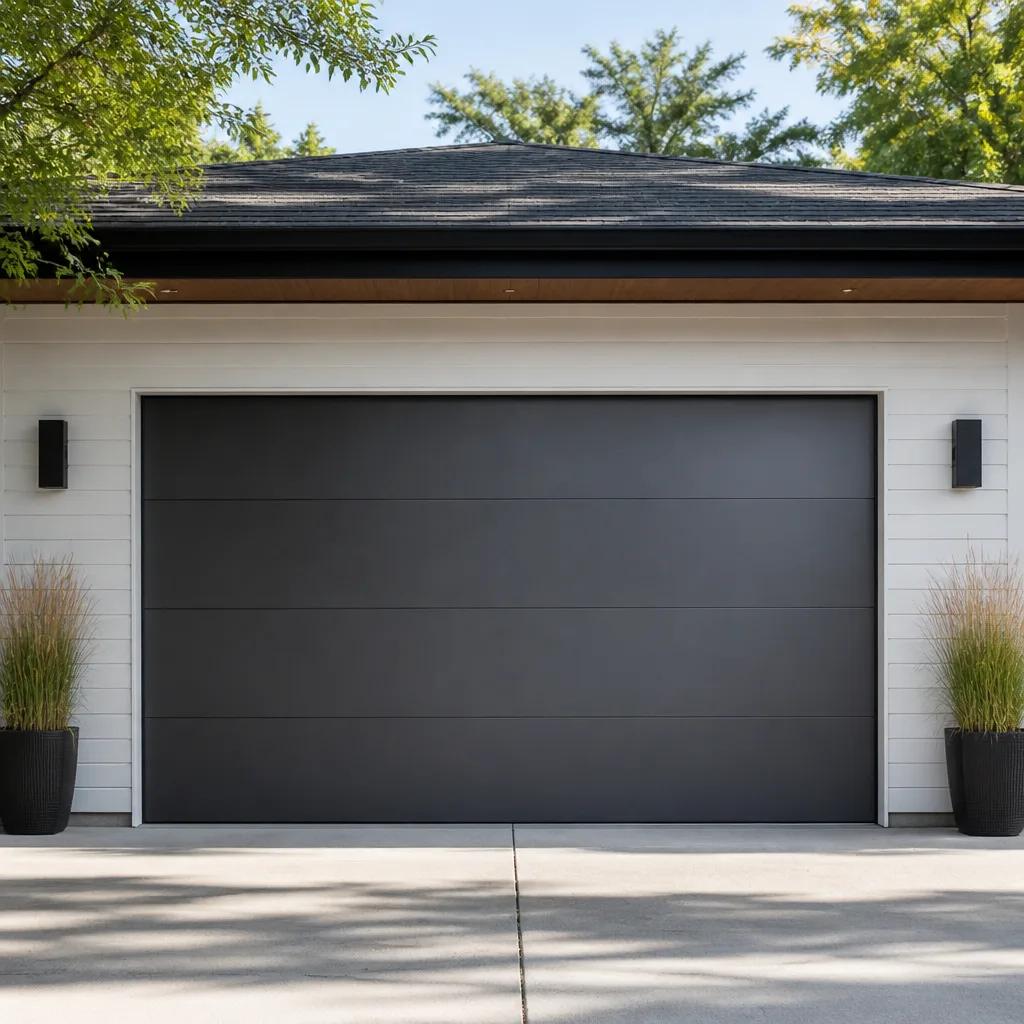 Modern flush
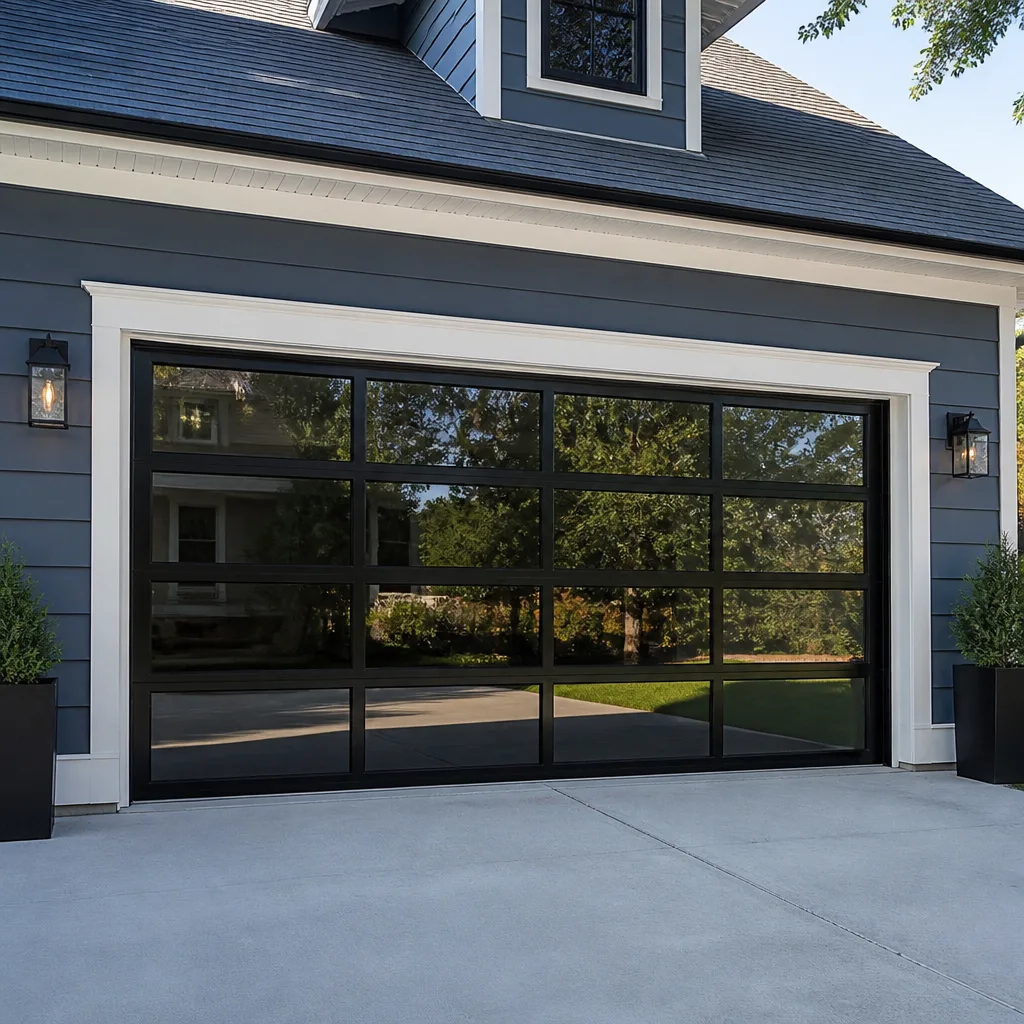 Full-view glass
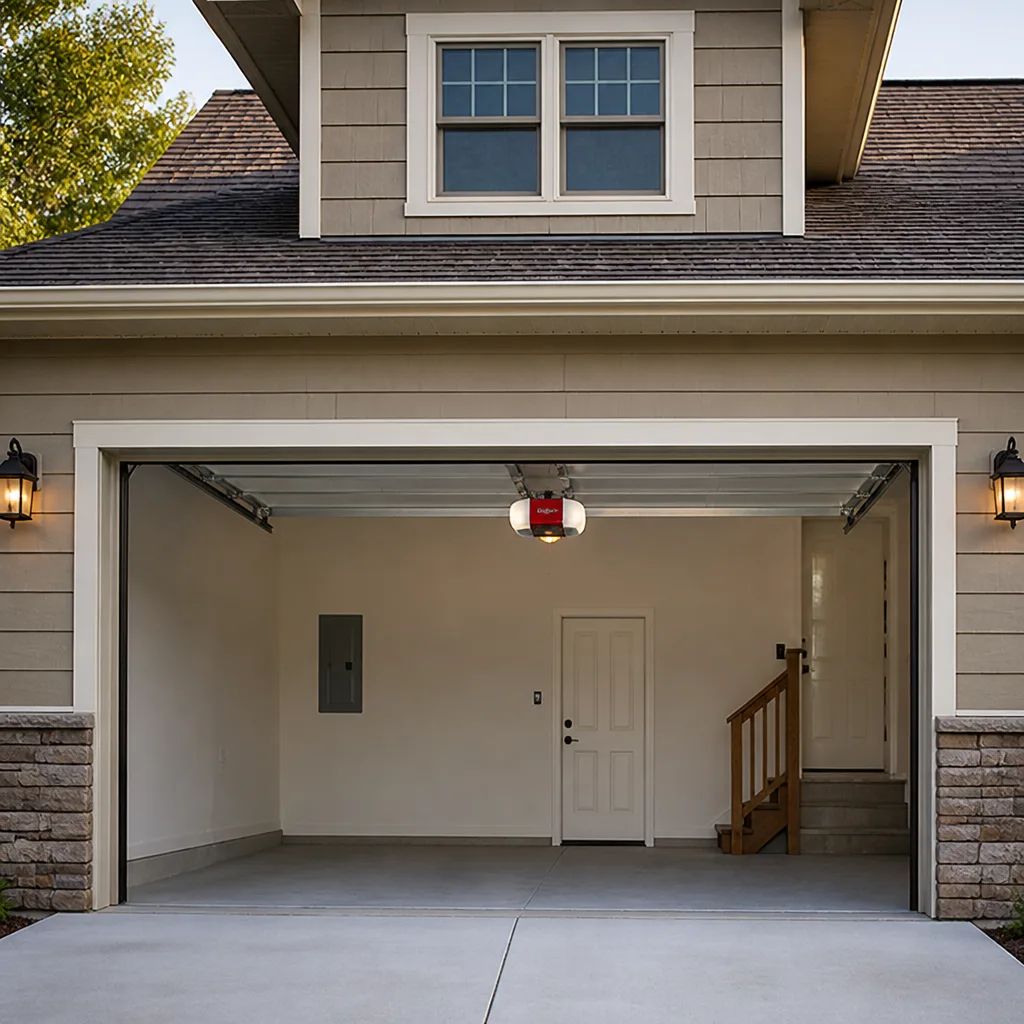 LiftMaster openers
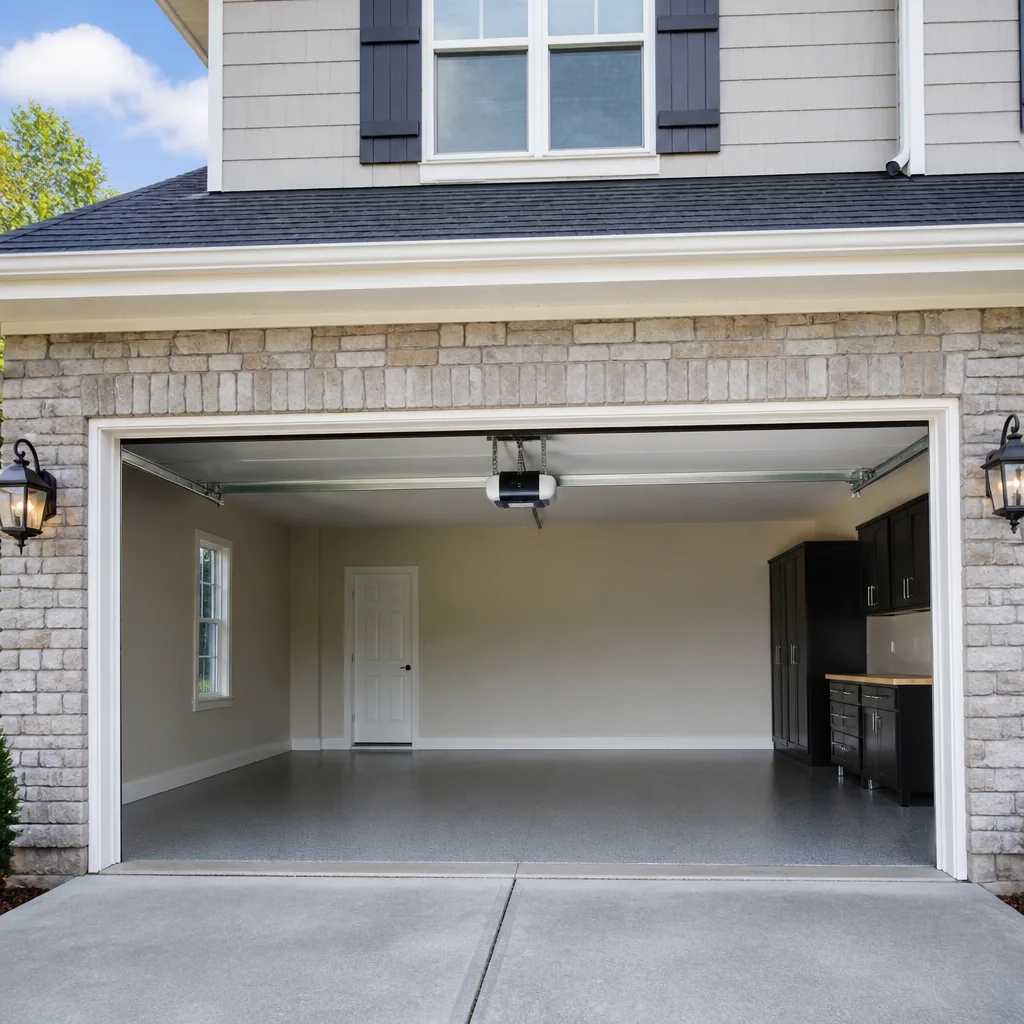 Chamberlain openers
Full 25-point door and opener safety check with every visit - springs, cables, rollers, tracks, and your LiftMaster or Chamberlain opener included
You get a price before we start. It does not change when the pro arrives.
Get your free estimateDIY vs Professional Garage Door: The Wesley Chapel Homeowner’s Decision Guide
Garage door torsion springs store enough energy to cause a serious injury in under a second, and the YouTube tutorials that show replacement never show the emergency room visits that happen when the technique is slightly off by a quarter turn. That gap between what looks doable and what is actually safe is where most garage door decisions go wrong. In Wesley Chapel, there’s a second layer most guides ignore: Florida Building Code requirements, HOA documentation rules, and manufacturer warranty terms that quietly decide the outcome before anyone picks up a wrench. This guide draws a hard line between the tasks a careful homeowner can genuinely handle and the ones that create real risk, with the cost math to back it up.
Quick Answer
Lubrication, weatherstripping, bottom seals, photo-eye alignment, and opener battery or remote pairing are genuinely DIY-safe. Spring work, cable work, torsion hardware, track realignment, and full door or opener installation belong with a trained technician, both for safety and for Florida code and warranty reasons. For everything in that second group, the pro route usually costs less than a DIY attempt plus the call that follows it, and it doesn’t put anyone in the hospital. Call (855) 337-1134 for a free estimate.
Styles & brands we work with
- Raised-panel steel
- Carriage house
- Modern flush
- Full-view glass
- LiftMaster openers
- Chamberlain openers
Table of Contents
- Where the DIY Line Actually Falls
- Tasks That Are Genuinely DIY-Safe
- Tasks That Require a Trained Technician
- Why DIY Installation Can Void Your Manufacturer Warranty
- Florida Building Code and Self-Permitted Installs
- HOA Rules in Wesley Chapel Communities
- The Real Cost Comparison: DIY vs Professional
- Common Mistakes to Avoid
Where the DIY Line Actually Falls
Most homeowners approach a garage door problem with one question: can I fix this myself? The better question is whether a mistake here fails quietly or fails violently. A misaligned photo-eye stops the door and gives you a blinking light. A mis-seated torsion spring lets go with enough force to break bones. Those two failures look similar on a screen and live in completely different categories in real life.
We draw the line using three tests, in this order:
- Stored energy. Does the task involve a component holding tension, weight, or both? Springs, cables, and the door itself at height all fail this test. Skip straight to a technician.
- Structural and code impact. Does the work touch the door’s mounting, balance, or the opening itself? In Florida, that’s where permitting and inspection enter the picture, and where a self-installed door can become a paperwork problem later.
- Warranty exposure. Does the task involve drilling, cutting, rewiring, or replacing a part with a non-OEM piece on a door or opener still under warranty? If yes, the money saved today can cost you a claim later.
Anything that clears all three is likely safe with care and the right tools. Anything that trips even one deserves a second look. In our experience across Wesley Chapel homes, the vast majority of spring, cable, and track calls we handle started as a weekend project that stalled halfway. Belt-and-chain openers from LiftMaster and Chamberlain are a good example: the battery and remote work is simple, but the travel-limit adjustments and force-sensor calibration require knowing the model’s specific sequence, and guessing can strip the gear or leave the door reversing unpredictably.
That’s why we lead with diagnosis first, parts second. The failure mode tells you what’s actually wrong, and the brand tells you how it’s built. We work on your brand, whether that’s Raynor, LiftMaster, Chamberlain, or Genie, so the fix matches the mechanism instead of a generic workaround.
Tasks That Are Genuinely DIY-Safe
Some garage door maintenance is well within reach for a careful homeowner, and we’d rather you spend a Saturday afternoon on it than pay someone to do it. The important thing is knowing which tasks those are and doing them correctly.
These are the jobs we’d hand a homeowner without hesitation:
- Lubrication. A small amount of garage door lubricant on the rollers, hinges, and torsion bar bearings keeps the door quiet and reduces wear. Avoid WD-40 on the moving parts; use a purpose-made lubricant.
- Bottom seal replacement. A worn rubber seal lets water and pests in and is straightforward to swap on most doors. Measure the width, buy the matching profile, slide the old one out, push the new one in.
- Weatherstripping. Jamb seals around the door frame are a simple trim-and-press job, and fresh stripping helps keep Wesley Chapel’s summer humidity and heavy rain out of the garage.
- Photo-eye alignment. If the door reverses or won’t close, check whether the two small lenses near the floor are aimed at each other and whether anything is blocking the beam. Cleaning the lenses or nudging the brackets back into line usually solves it.
- Opener battery, remote, and keypad pairing. Replacing the backup battery in a LiftMaster or Chamberlain opener or re-pairing a remote is a manual-in-hand job, not a technician call.
- Visual inspection. A monthly look at the springs, cables, and rollers, without touching anything under tension, catches problems early.
These tasks share one trait: they never involve stored spring energy or working at height on a moving component. They’re low-risk, and they keep the door functioning longer between professional visits.
If you’d rather hand even the small jobs off, we cover routine garage door repair across Wesley Chapel, and the price gets set in writing before anything starts.
Tasks That Require a Trained Technician
This is where the guide earns its keep. The tasks below are the ones that send homeowners to urgent care and the ones that turn a small repair into a full door replacement. They are not YouTube jobs, no matter how clear the video looks.
- Torsion and extension spring replacement. The torsion spring above the door carries enough stored energy to cause serious injury instantly. The winding process requires the right bars, the correct number of turns for your door weight, and a clear understanding of what happens if a bar slips. This is the single most dangerous component in any garage door system, and it’s why we keep spring repair as its own dedicated service instead of an add-on.
- Cable replacement. Cables run under tension alongside the springs. A snapped or improperly seated cable can whip with enough force to cut. Leave it to a technician.
- Track realignment and bracket repair. A bent track or pulled bracket means the door’s geometry is off, and forcing it back into place can drop the door or damage the panels.
- Opener motor, gear, or board replacement. Modern openers, particularly smart-home enabled LiftMaster and Chamberlain units, require model-specific diagnostic knowledge. Swapping a board or gear is safe, but diagnosing which component failed is the expert part.
- Full door or opener installation. This is where code, warranty, and structure all intersect, and it’s covered in the next two sections.
- Any work on a door that’s off its track or hanging unevenly. Stop using the door, don’t force it, and call. A door under unusual stress can fail completely when cycled.
When a spring lets go, the noise is unmistakable, and the door stops responding. That’s the moment to call, not the moment to start winding. If you need urgent help, we’re set up for that: same-day service is part of what we do, and our garage door spring repair team handles the winding and balance with the right tooling. When the door won’t move, we move fast.
For a spring that’s already broken, don’t run the opener. The motor will strain against a door it can’t lift, and that’s how a spring repair becomes an opener repair too.
Why DIY Installation Can Void Your Manufacturer Warranty
Most garage door manufacturers tie their warranty to professional installation, and the fine print is specific. Clopay, Amarr, and Wayne Dalton doors generally require installation by a qualified dealer or installer to keep the warranty in force, and self-installation typically voids the coverage entirely. That matters because a door that fails in year two isn’t usually a manufacturing defect you can prove after the fact.
Here’s how the warranty math actually plays out:
- A spring or panel fails in year two. On a professionally installed Clopay or Amarr door, that’s a warranty claim. On a self-installed door, it’s your bill, and you’re paying for the replacement plus the labor plus the installation you thought you’d avoided.
- The failure is traced to installation. Even a door with intact warranty can have a claim denied if the manufacturer determines the door was hung wrong, the springs were torqued to the wrong setting, or the track was secured incorrectly. That’s the most common denial reason we see.
- The opener is the same story. LiftMaster and Chamberlain warranties are written around professional setup. A self-installed opener with a mis-set force sensor that strips the gear in year two is often not covered.
Our technicians have up to 8 years of experience with these brands, which is why we can tell you up front whether your door is under warranty, what the failure likely is, and whether a claim is worth pursuing. Diagnosis first, parts second, always.
If the door is newer and the warranty is still live, ask before you touch anything. It’s the cheapest question you’ll ever ask.
Florida Building Code and Self-Permitted Installs
In many parts of the country, installing a garage door is a straightforward permit pull or, in some jurisdictions, no permit at all. Florida is different, and Wesley Chapel sits inside a code environment that treats the garage door as part of the building envelope, not a piece of trim.
Florida Building Code requirements generally apply to garage door replacement and installation because the door is a structural opening that must meet wind and impact standards for the region. That means:
- Permits are often required for door replacement or installation, depending on your jurisdiction and the scope of work. Ask Pasco County’s building department directly; the answer depends on your specific project.
- Self-permitting is possible in some cases, but the inspection process requires you to demonstrate the door meets the applicable standards, and the paperwork burden falls on you if something goes wrong. In jurisdictions where self-permitting is straightforward, DIY can work. In Florida’s wind-driven environment, it usually isn’t worth the risk.
- The wrong door fails inspection. A door rated for a different wind zone than your home won’t pass, and you’ll be pulling it back out.
- Final inspection is not optional. A door that’s installed but never inspected can become a problem at resale, when a buyer’s inspector asks for the permit record.
We handle the permit and inspection side when we install, and we can tell you what to ask your building department if you’re weighing the DIY route. If you’ve had a rough install and need help getting it right, we also handle the garage door opener repair and adjustment work that often follows.
The short version: if a permit and inspection are involved, the difference between a DIY install and a professional one is less about skill and more about legal exposure. That’s a line worth understanding before you buy a door.
HOA Rules in Wesley Chapel Communities
Wesley Chapel has a large share of deed-restricted communities, and exterior changes go through architectural review. Garage doors are one of the most visible exterior features on any home, which means door changes get close HOA attention.
What we see from Wesley Chapel HOAs generally:
- Prior approval is required before installation. Most HOAs require an application and approval before any exterior door change, not after. Installing first and asking later is a common and expensive mistake.
- Documentation requirements. Many associations want a contractor’s license information, insurance certificate, and product specifications for the door being installed, including the model, color, and wind rating. A homeowner doing the work themselves often can’t supply what the HOA is asking for.
- Material and color restrictions. Some communities limit door style, panel design, or color to keep a uniform streetscape. A door you love from the manufacturer’s catalog may still be rejected by your HOA.
- Contractor approval. Several associations also require the installing contractor to be approved or registered with the community before work can begin.
None of this is a big obstacle if it’s handled early. It becomes a real problem when a door is already installed and the association sends a letter. Our position is simple: give the HOA the paperwork it wants before the door goes up, and the whole project stays on schedule.
If you’ve bounced around between contractors and are unsure of your community’s rules, tell us your community on the call and we’ll help you figure out what’s needed.
The Real Cost Comparison: DIY vs Professional
The DIY conversation usually starts and ends with the price of a spring or a door at a big-box store. That misses two costs that show up later: the professional call after a failed attempt, and the parts you bought twice.
Here’s the comparison we’d give a friend:
| Scenario | What You Pay | What You Get |
|---|---|---|
| DIY spring replacement | Parts cost plus tooling you likely don’t own, plus the injury or reinjury risk | A spring that might work; no warranty on labor; the call if it doesn’t |
| Professional spring repair (single spring) | A written, agreed estimate before work starts | Correct spring for your door’s weight, wound and balanced to spec, tested and guaranteed |
| DIY door install | Door cost, permit and inspection responsibility, HOA paperwork, warranty voided | A door that may fail inspection or warranty claim |
| Professional door install | A written, agreed estimate covering door, install, and permit handling | Warranty intact, inspection-ready, HOA-compliant |
The pattern is that DIY saves on labor only when nothing goes wrong, and something going wrong in this category is common. A DIY attempt that stalls halfway plus a professional repair usually lands well above the professional estimate you didn’t take. On the install side, a voided warranty on a Clopay or Amarr door can wipe out the entire savings in year two.
We don’t quote prices over the phone, because the door weight, spring configuration, and existing hardware all matter. We quote and agree the price before any work starts, and the written estimate is the final number. Call (855) 337-1134 for a free estimate.
Common Mistakes to Avoid
- Assuming the spring is the only problem. A broken spring often means the cables and rollers took a hit too. Replacing only the spring without checking the rest can leave the door unbalanced. We test the full system after any spring repair.
- Buying a spring by length alone. Springs are matched to door weight and cycle life, not just size. A spring that’s the wrong gauge or winding will wear out early or strain the opener.
- Skipping the HOA before you buy. In Wesley Chapel, a door rejected by the architectural review board after purchase is a costly redo. Get approval in writing first.
- Installing a door without checking the wind rating. Pasco County’s wind standards mean the wrong door won’t pass inspection, and re-doing the install costs more than the original job.
- Ignoring a door that reverses on its own. A door that reverses mid-close is telling you the photo-eye or force setting is wrong. Don’t override it with the wall button; fix the cause.
- Using the opener on a broken spring. The motor can’t lift a door the spring should be helping. This turns a spring repair into a spring plus opener repair.
- Pairing a smart-home opener without calibrating limits. Modern LiftMaster and Chamberlain units won’t work reliably if the travel limits weren’t set to the door’s actual travel. That’s a model-specific setup, not a plug-and-play step.
When to Call a Professional
Call a professional for any spring, cable, or track problem, any door off its track, any door that reverses unpredictably, any opener that clicks without moving the door, and any installation or replacement involving a permit or an HOA. Call also if you’ve already started a DIY attempt and hit a wall. Stopping mid-job is a phone call; finishing wrong is a repair. For a broken spring on a Sunday or a door that won’t close at night, we’re set up for emergency response. Wesley Chapel Garage Door Repair Co offers free estimates in Wesley Chapel. Call (855) 337-1134. We answer 24/7. Fast dispatch from 7am to 7pm, Sunday through Friday.
See the difference
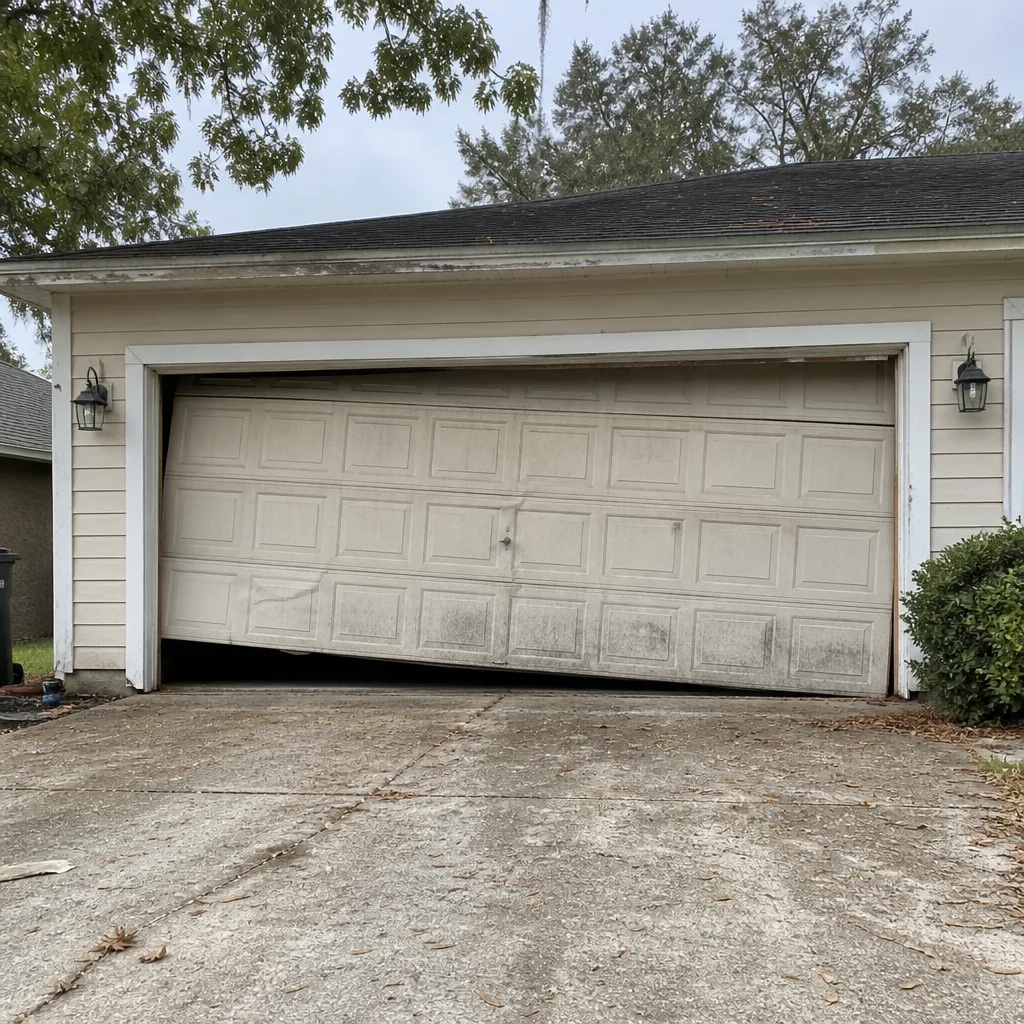 Before
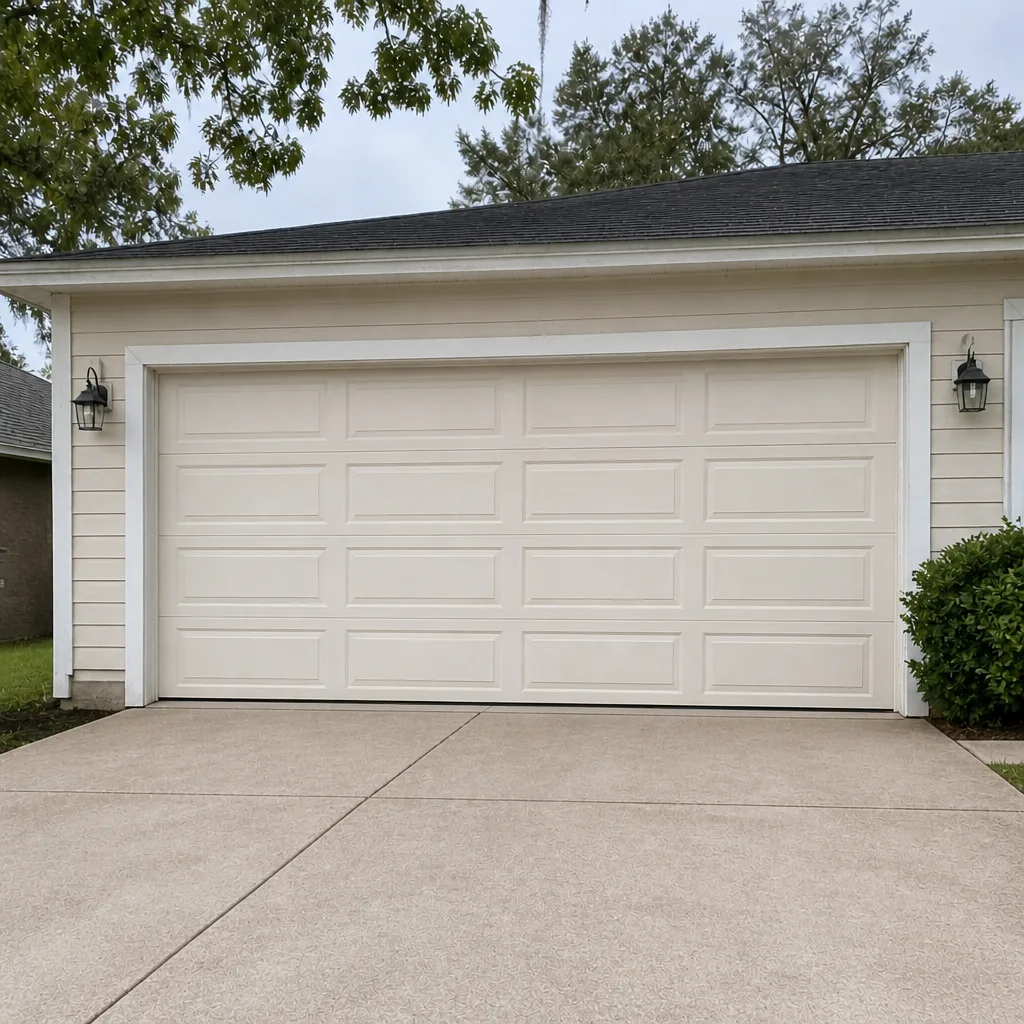 After
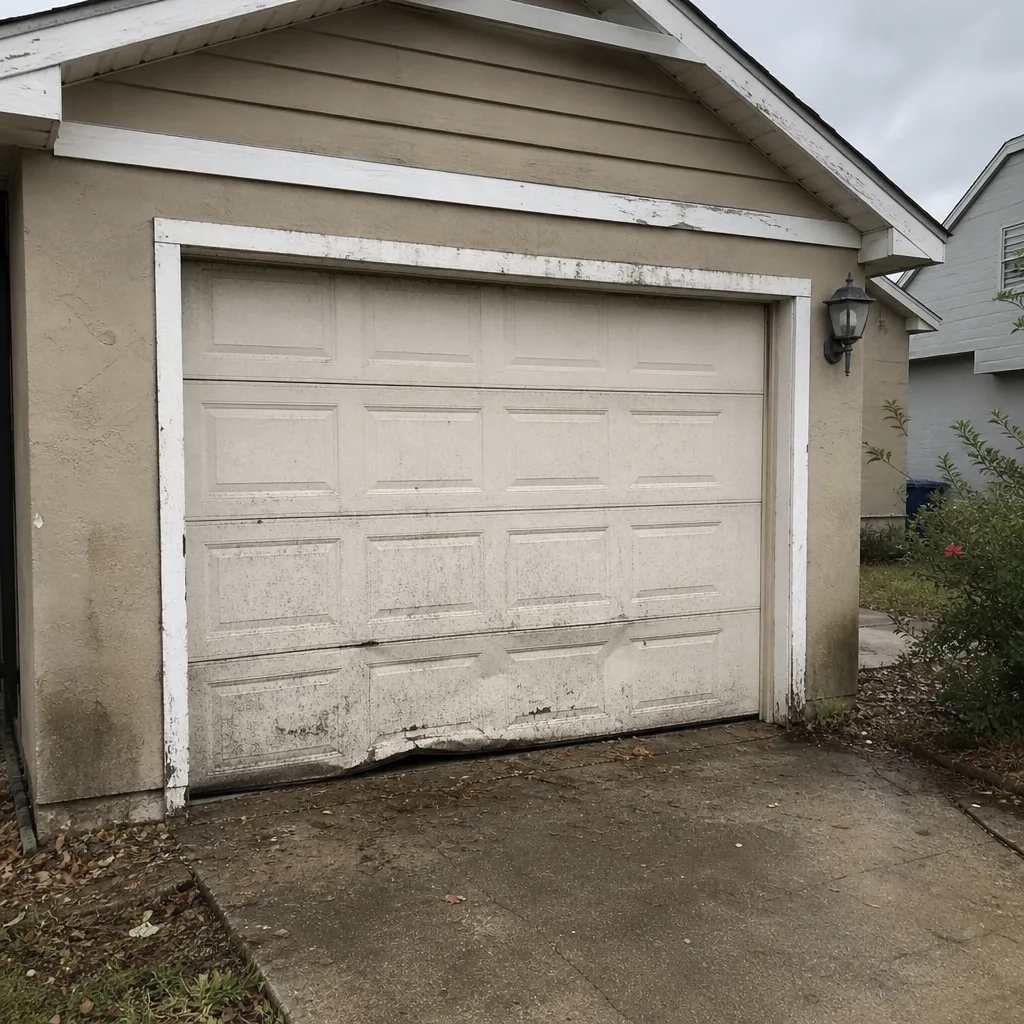 Before
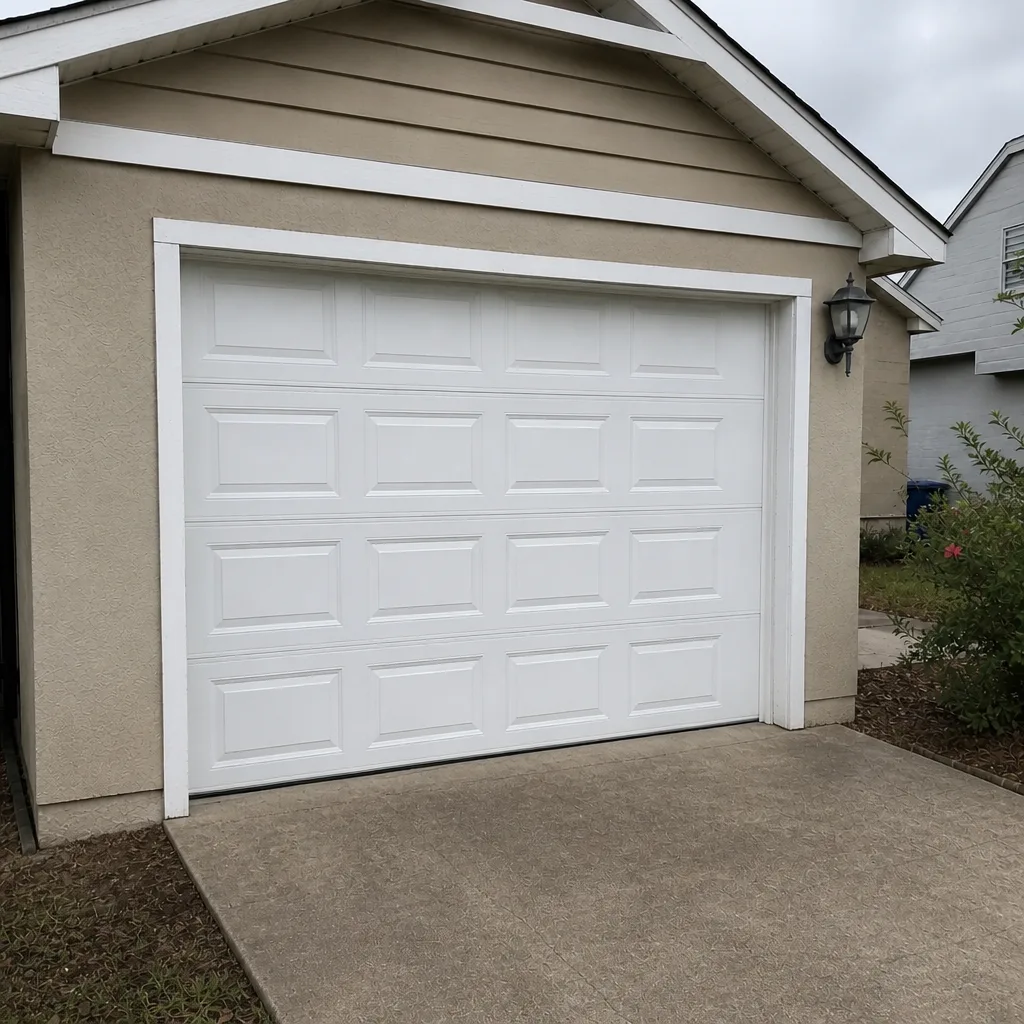 After
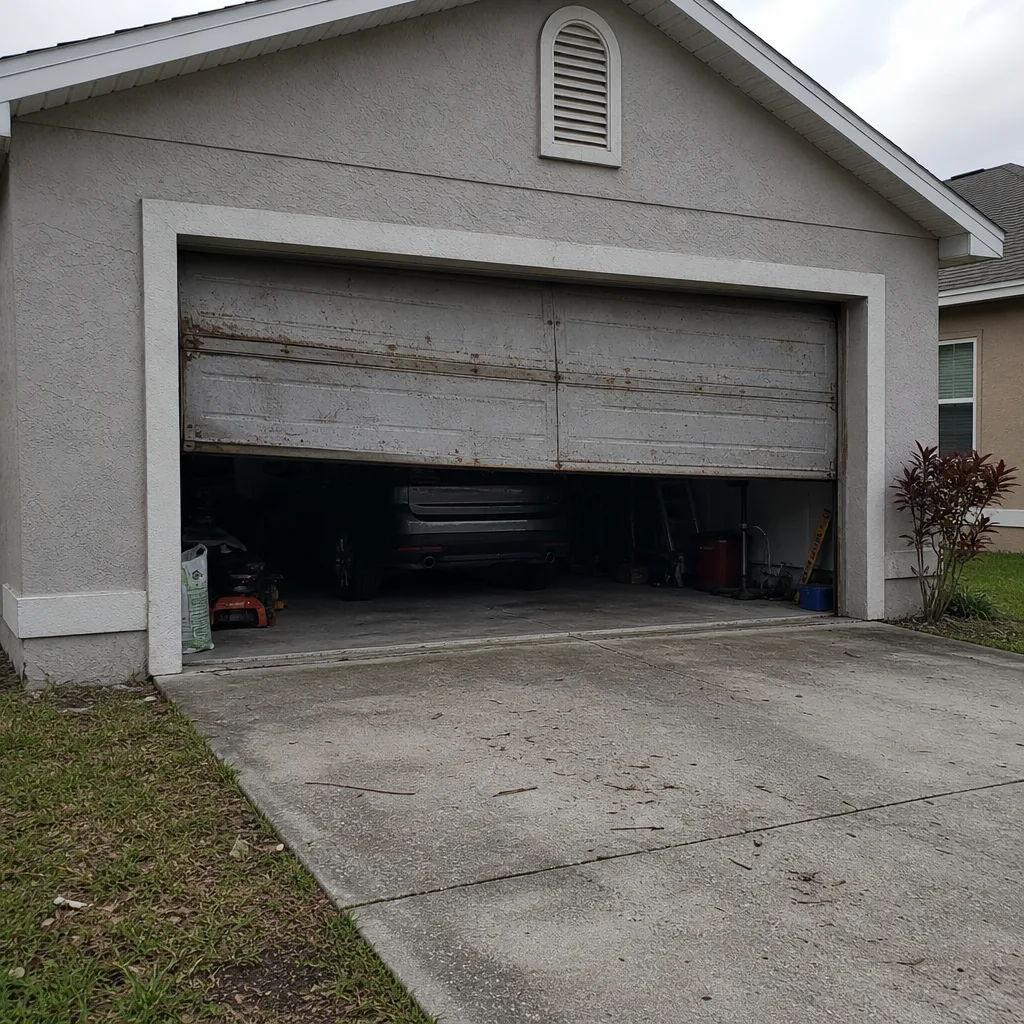 Before
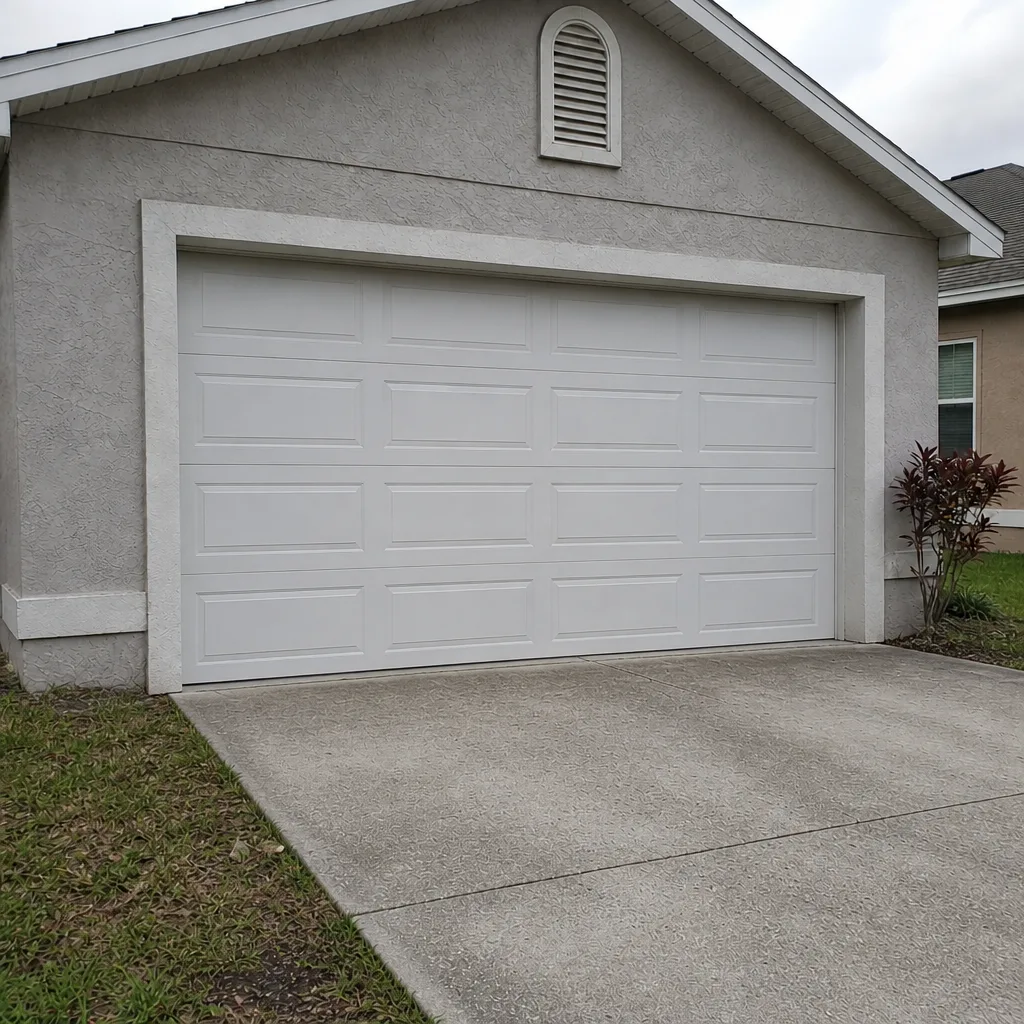 After
Frequently Asked Questions
It’s possible in the sense that people do it, but it isn’t safe. The torsion spring stores enough energy to cause serious injury in a fraction of a second, and the winding procedure requires specific tools and door-weight calculations. We recommend a trained technician for spring work every time. Call (855) 337-1134 for a free estimate on a safe repair.
Very often, yes. Clopay, Amarr, and Wayne Dalton warranties are typically tied to professional installation, and self-installation can void coverage entirely. A door that fails in year two on a self-install is usually your bill. Call (855) 337-1134 and we’ll tell you what your warranty covers before you decide.
Often yes, because Florida Building Code treats the garage door as a structural opening that must meet wind and impact standards. The exact requirement depends on your project and jurisdiction, so ask Pasco County’s building department directly. When we install, we handle the permit side for you. Call (855) 337-1134 to discuss your door.
Prices vary with the door weight and spring configuration, so we quote per job in a written estimate before any work starts, and that written number is the one you pay. Single-spring and matched-pair replacements are priced differently because a pair costs about twice a single spring. Call (855) 337-1134 for a free estimate.
For repair work, often yes. Same-day service is part of how we operate, and we answer the phones 24/7. Fast dispatch runs from 7am to 7pm, Sunday through Friday. Call (855) 337-1134 and we’ll get you on the schedule.
We service LiftMaster, Chamberlain, Genie, Clopay, Amarr, Wayne Dalton, Craftsman, and Raynor. That brand familiarity matters for diagnosis, since each manufacturer builds its springs, openers, and hardware differently. We work on your brand, not a generic approximation. Call (855) 337-1134 with your model ready.
The Bottom Line
The DIY question for garage doors comes down to stored energy, code impact, and warranty exposure. Lubrication, seals, weatherstripping, and remote pairing are yours to own. Springs, cables, tracks, and installations are not, and in Wesley Chapel the Florida Building Code and HOA review process make the install decision even clearer. The apparent savings from DIY usually shrink or disappear once a failed attempt, a voided warranty, or a rejected HOA application enters the picture. When the work involves tension, height, or paperwork, the professional route is the one that keeps the door working and the house compliant. Call (855) 337-1134 for a free estimate. We answer 24/7. Fast dispatch from 7am to 7pm, Sunday through Friday.
Same company, full fix: from a broken spring on a Sunday night to a brand-new door with the HOA paperwork in hand, you don’t need a second call. Learn more at Wesley Chapel Garage Door Repair Co.
Written by the team at Wesley Chapel Garage Door Repair Co.