
Last updated November 21, 2026
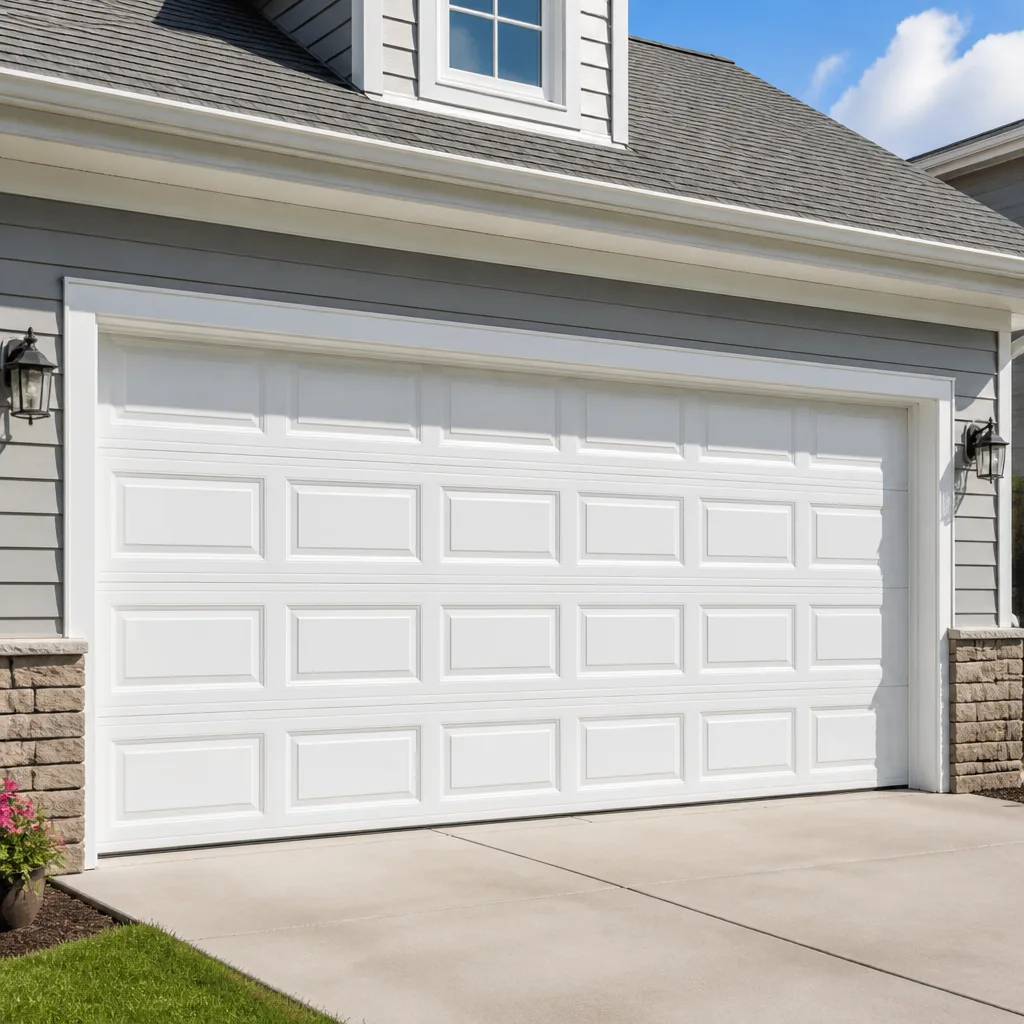 Raised-panel steel
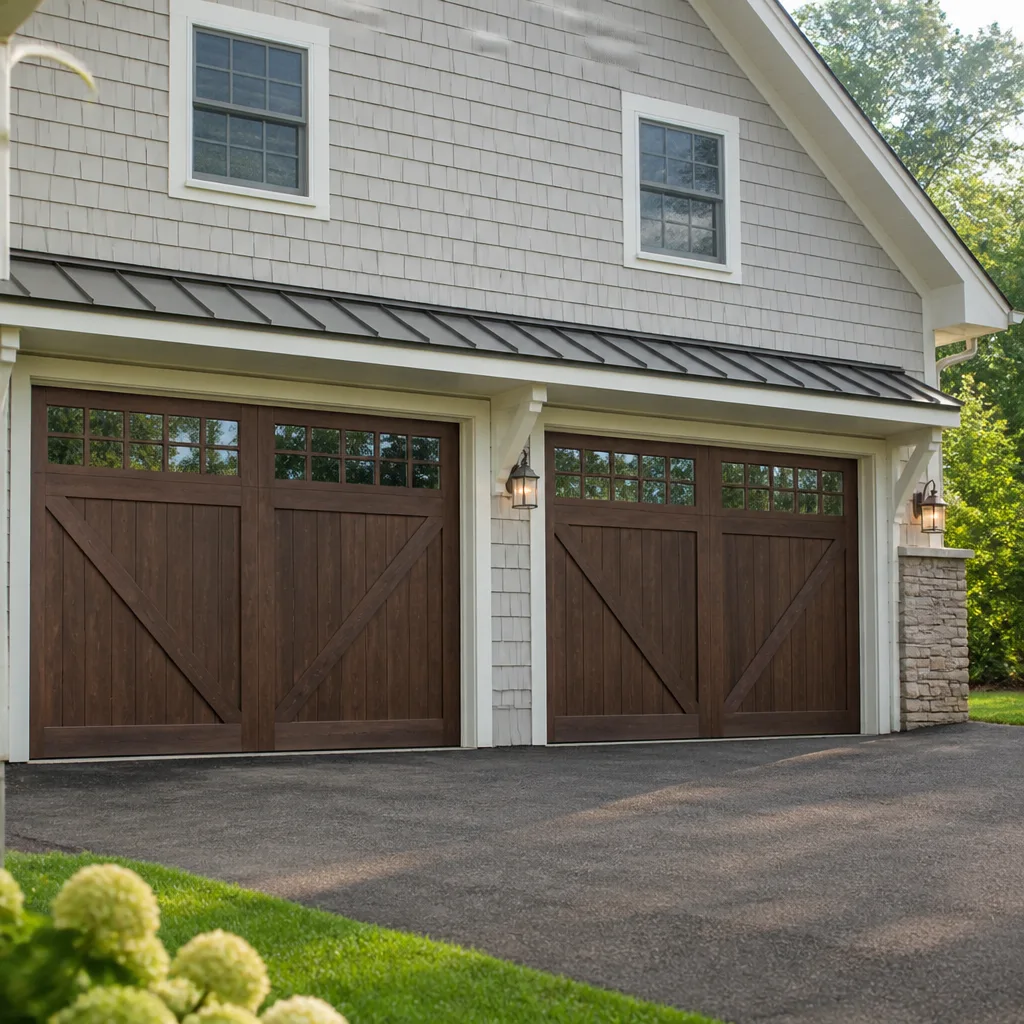 Carriage house
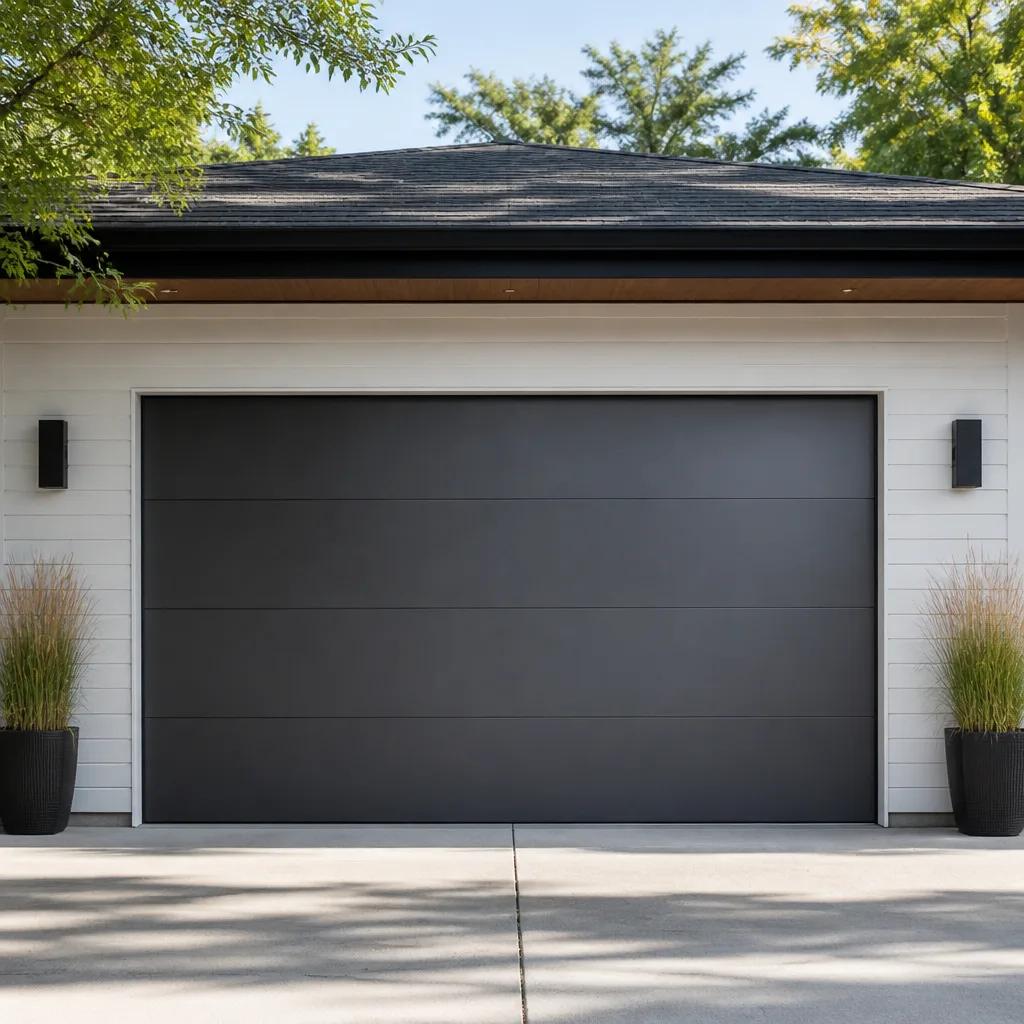 Modern flush
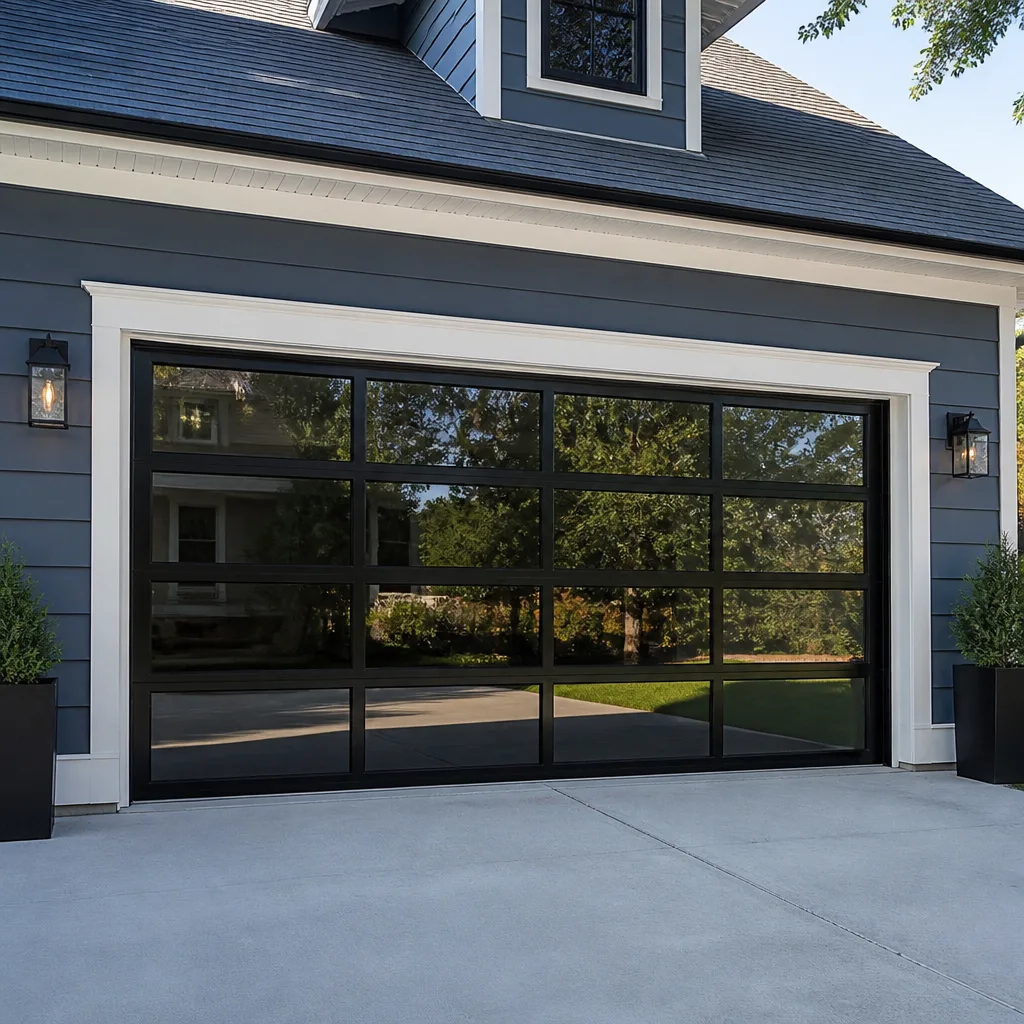 Full-view glass
 LiftMaster openers
 Chamberlain openers
Full 25-point door and opener safety check with every visit - springs, cables, rollers, tracks, and your LiftMaster or Chamberlain opener included
You get a price before we start. It does not change when the pro arrives.
Get your free estimateGarage Door Warning Signs: A Wesley Chapel Homeowner’s Reference Guide
A garage door that hesitates for two seconds before closing and one that reverses unexpectedly look like the same kind of problem to most homeowners. They aren’t. One is often a tired opener or a misaligned track; the other can point to a spring that’s about to fail under extreme tension, and that’s a same-day safety issue. The difference matters because the wrong reaction – ignoring a real warning or calling in panic over a harmless quirk – costs you either safety or money. This guide gives every common warning sign a response timeline, from “watch it” to “stop using the door right now.” By the end, you’ll know which sounds map to which components, what a slow door in a Wesley Chapel home usually signals, and when it’s time to call.
Quick Answer
Most garage door warning signs fall into three urgency tiers: monitor (minor noise, cosmetic wear), schedule within a week (struggling opener, grinding, slow movement), and stop using immediately (broken spring, snapped cable, door off track, repeated reversal). The tell for the dangerous tier is usually a sudden change – the door gets dramatically heavier, a loud bang comes from above, or it stops halfway and hangs. If you see any of those, keep the door down and call a trained professional today.
Styles & brands we work with
- Raised-panel steel
- Carriage house
- Modern flush
- Full-view glass
- LiftMaster openers
- Chamberlain openers
Table of Contents
- The Three-Tier Urgency System: How to Read Any Warning Sign
- What the Sounds Are Telling You: Grinding, Popping, Scraping, Rattling
- Visual Warning Signs Unique to Florida’s Climate
- Spring Failure vs. Opener Motor: How to Tell Them Apart
- Warning Signs That Show Up in Your Smart Opener App First
- When Stop Using the Door Means Stop: Safety and High-Tension Springs
- A Simple Monthly Check Any Homeowner Can Do
The Three-Tier Urgency System: How to Read Any Warning Sign
Every warning sign gets sorted into one of three tiers, and knowing which tier you’re in changes what you do next. This is the single most useful framework in this guide. Most homeowners treat all garage door symptoms the same way – they either ignore everything until the door quits, or they panic and stop using a door that’s actually fine. Neither is right.
Tier 1: Monitor. Cosmetic or slow-developing issues. A faint new noise, a slightly crooked weatherstrip, some rust on a hinge. The door operates reliably. Keep an eye on it and mention it the next time a technician is out. A cracked bottom seal on an Amarr or Clopay door falls here when the door still closes fully – it’s letting in air and pests, but it isn’t a safety hazard.
Tier 2: Schedule service within a week. The door still works but something is clearly wrong. Grinding through part of the travel, a door that pauses before it lifts, an opener that strains, a remote that only works up close. These point to worn rollers, a stretched chain, a tiring opener motor, or a spring under load but not yet broken. Left long enough, most Tier 2 problems become Tier 3 problems.
Tier 3: Stop using the door immediately and call today. A loud bang followed by a door that won’t lift. A door that’s visibly off its tracks. A snapped cable hanging loose. A gap at the bottom of one side because a spring broke. A door that reverses on its own with nothing in the way. Any of these is a call-us-now situation, and in our experience it’s the tier homeowners most often underestimate.
Sort your symptom into a tier before anything else. It’s the fastest way to decide whether you can wait for a scheduled visit or need garage door repair sooner.
What the Sounds Are Telling You: Grinding, Popping, Scraping, Rattling
A garage door is a mechanical system, and it mostly talks through noise. The trick is that different sounds come from different components, so the noise itself narrows down what’s wrong before anyone looks at it. Here’s how we map the four most common sounds.
Grinding. A metal-on-metal grind during travel usually means dry or worn rollers, a torsion bar rubbing, or a roller bearing that’s seized. On older steel doors the hinges can be worn. Grinding is a Tier 2 sign in most cases – the door still runs, but friction is slowly eating the moving parts. A well-lubricated, properly aligned door should be quiet.
Popping. A single loud pop, or a series of pops as the door opens, often points to a torsion spring that has wound and snapped. It can also come from a panel that’s binding. If a pop was followed by the door suddenly feeling very heavy, treat it as Tier 3 – that’s a broken spring, and a broken torsion spring is not something to test.
Scraping. A scraping sound usually means the door is rubbing where it shouldn’t: along the track, against the header, or on the bottom seal dragging the floor. Scraping doesn’t usually point to springs, but it can indicate an off-track door or a bent panel. Wayne Dalton doors with their one-piece track systems occasionally scrape at the bottom corner when the door’s out of alignment.
Rattling. Loose hardware – hinges, roller stems, track brackets. Usually Tier 1: snug things up, add a little lubricant on the hinge plates, and see if it quiets down.
If the sound doesn’t match anything on this list, or it changes character over a week, that’s your signal to have someone look at it. Sounds rarely get better on their own.
Visual Warning Signs Unique to Florida’s Climate
Warm, humid air and long rainy-season cycles do specific things to garage doors in the Tampa Bay area, and the visual evidence shows up in predictable places. Some of these you simply won’t see in colder, drier parts of the country. Here’s what to look for on a Wesley Chapel door.
- White mineral deposits on the tracks and hardware. Hard water and humid air leave a chalky ring on steel track brackets and hinges. It’s mostly cosmetic, but if the deposit is thick enough it can bind a roller. Wipe a spot and see if paint is still intact underneath – exposed steel will start to rust faster once the coating is gone.
- Orange rust streaking on cables and springs. Rust on a torsion spring or a lift cable is a warning that the steel is losing strength. Surface blush is one thing; orange, flaky rust on a cable strand means the strand is compromised and should be replaced. Treat this as Tier 2 at minimum.
- UV-cracked bottom seals. Florida sun will dry and crack a rubber bottom seal within a few seasons. A cracked seal lets water and small pests under the door – and a wet slab under a door can lead to a rusty bottom panel over time. Replacing the seal is inexpensive and usually done during a routine service call.
- Warping or swelling on wood-look doors. Some doors (including certain Clopay wood-composite models) absorb moisture at the bottom edges. Look for bubbling or softness on the lowest panel after a heavy stretch of rain.
- Faded paint and chalky finish on the panels. Not a safety issue, but worth noting on a Wayne Dalton or Amarr steel door that’s facing full afternoon sun.
- Wet spots on the slab under the door after rain. Usually a seal or threshold problem, occasionally a door sitting slightly out of level. If it happens every storm, it’s worth checking.
None of these alone stops a door. But several together point to accelerated wear, and a door that’s wearing faster than its age suggests is one to schedule a visit for.
Spring Failure vs. Opener Motor: How to Tell Them Apart
This is the distinction that matters most, because it decides whether you’re looking at a safety risk or a convenience problem. A slow or struggling door is the single most common symptom homeowners bring up, and it has two very different causes. Test the door by hand – carefully – to know which one you have.
- Disconnect the opener. Pull the release cord so the door is free of the motor. Do this only with the door fully closed.
- Lift it partway by hand. A properly balanced door lifts easily with one hand, about the same effort as lifting a lightweight suitcase. If it feels like lifting a loaded dresser, the springs are weak or broken.
- Let it rest in place. A balanced door stays where you put it. A door that crashes back down has weak springs; a door that wants to rise on its own has springs that are overtightened.
- Reconnect and listen. If the door lifted easily by hand but the opener still strains, the problem is the opener’s motor, gear, or drive belt – not the springs.
That hand-lift test is the whole answer. If the door is heavy, the springs are failing, and that’s a Tier 2 at minimum. If the door lifts normally and the opener is the one grunting, you’re looking at an opener motor issue or a drive problem, which is a repair rather than a safety concern. Spring work is high-tension work and dangerous to touch, so never attempt a spring repair yourself. When a spring is involved, call for garage door spring repair – diagnosing springs is what we do, and doing it safely is the point.
The other half of the trade-off: if the hand-lift test is fine but the opener won’t respond to the remote at all, that’s a different problem – remote, wall control, sensor, or logic board. Our garage door opener repair team handles brand models including LiftMaster, Chamberlain, Genie, and Craftsman, and the diagnosis starts with the model number, not the symptom. Diagnosis first, parts second.
Warning Signs That Show Up in Your Smart Opener App First
Smart and Wi-Fi-connected openers report on themselves in ways older openers never did – and some of the most useful warnings show up in the app before you’d ever notice them by looking at the door. On a LiftMaster with myQ or a Chamberlain with smart-home integration, watch for these in the app:
- Frequent “obstruction detected” alerts. If the app keeps recording obstruction events and nothing is visibly under the door, the safety sensor alignment or the travel limits need attention. Repeated false obstructions can point to a sensor that’s drifting, dirt on the lens, or a wiring issue.
- Open or closed notifications that contradict what you see. If the app says the door is closed but you’re standing in front of an open door, the tilt sensor or the position calibration is off.
- Slow-travel reports or longer open/close durations logged over time. A door that used to complete a cycle in about fifteen seconds and now takes twenty is slowing down. That’s an early Tier 2 warning that would be nearly invisible without the app history.
- Lost connection to the hub or repeated drops. On a Genie with Aladdin Connect or a Chamberlain with MyQ, repeated connection drops usually mean a weak Wi-Fi signal at the opener or a firmware issue, not a door problem – but it can hide a real door fault if the app is offline.
- Battery or maintenance reminders. Not urgent, but treat them as a nudge to book a visit before something actual breaks.
If your app has been sending the same alert for a week, don’t dismiss it. It’s likely showing you a real symptom before it becomes a visible one.
When Stop Using the Door Means Stop: Safety and High-Tension Springs
Some warnings are not something to monitor. A torsion spring on a typical residential door holds the full weight of the door under very high tension – several hundred pounds of stored force, depending on the door. When one breaks, it releases that force immediately. That’s why we treat broken springs, snapped cables, and off-track doors as a same-day call and not a weekend project.
Beyond the springs and cables themselves, a garage door is one of the largest moving objects in a home, and a door that comes off its tracks under its own weight is a genuine hazard. A car parked under it, a child’s bike, a pet – these are reasons a door that’s visibly compromised stays closed until a trained technician has looked at it.
Here’s the short list of stop-now signs:
- A door that will not lift at all, or that lifts and hangs partway
- A door that reverses without anything in its path
- A visible gap at the bottom on one side (often a broken spring)
- A snapped cable hanging loose
- A door visibly off its tracks, or a bent track
- A loud bang from the header followed by a heavy door
- A door that comes down hard and fast under its own weight
If you see any of these, stop using the door – including disconnecting the opener if you can safely do so – and call a professional. Our technicians have up to 8 years of experience with spring repair specifically, which is the highest-tension work in this trade. Spring repair done safely is not a matter of care and attention; it’s a matter of proper tools, proper technique, and knowing exactly how much tension is stored before you touch anything.
For the cases that can’t wait for a routine appointment, our emergency service is part of what we do – not a schedule-two-weeks-out operation when a door’s off its tracks or a spring just snapped.
A Simple Monthly Check Any Homeowner Can Do
Five minutes a month is enough to catch most Tier 2 and Tier 3 problems before they bite. Here’s the routine:
- Look at the springs. With the door closed, look up at the torsion bar or the extension springs at the sides. Look for gaps, rust, or a loose spring. Do not touch a spring, ever – just look.
- Look at the cables. Both sides, run your eyes down each cable. Look for fraying, kinks, or rust spots.
- Do the hand-lift test. Disconnect the opener and lift the door halfway. If it’s heavier than it used to be, or won’t stay put, note it.
- Check the tracks. Look for bent sections, loose brackets, and chalky mineral build-up. Run a cloth along a section to feel for grit.
- Test the safety reverse. Lay a rolled-up towel or a piece of wood under the door. Press close. The door should reverse on contact. If it doesn’t, stop and call – that’s a safety control failure.
- Watch the panels close up. Look for cracks, warping, or sagging on individual panels. A bent panel can scrape the track or bind the door.
- Listen. One open-close cycle with your hand off the remote. Note any new sound that wasn’t there a month ago.
That’s it. Write the date on a sticky note on the wall, or set a reminder on your phone. A door that gets this monthly check tends to give up on warning signs well ahead of actually failing. A door that gets nothing tends to fail at the worst time – usually when you’re driving out for work.
Common Mistakes to Avoid
- Forcing a door that’s visibly off track. This can bend the panel or damage the track beyond repair. Keep the door where it is and call.
- Assuming every slow door needs a new spring. Do the hand-lift test first. Some slow doors are weak springs; others are a tired opener motor or a worn drive belt. The two fixes are very different, and the wrong diagnosis costs you.
- Treating cosmetic rust as harmless. Surface blush on a spring or cable isn’t just cosmetic – it’s the steel losing integrity. Looks aren’t the point; the load is.
- Ignoring a cracked bottom seal through rainy season. A Wesley Chapel storm can push water under a door with a bad seal for weeks before you notice. Get it replaced at the next service call.
- Using a general handyman for spring work. Springs require specific tools, specific technique, and a trained technician. This is not a task to hand off to someone who “does a bit of everything.”
- Overlooking smart-opener app alerts. A persistent obstruction alert on a Chamberlain or LiftMaster app is a real signal, not a glitch. Address it before it becomes a car-into-door or door-into-car problem.
- Calling an emergency service for a Tier 1 problem. A rattle and a rusty hinge can wait for a scheduled visit. Save the urgency for the actual urgency.
See the difference
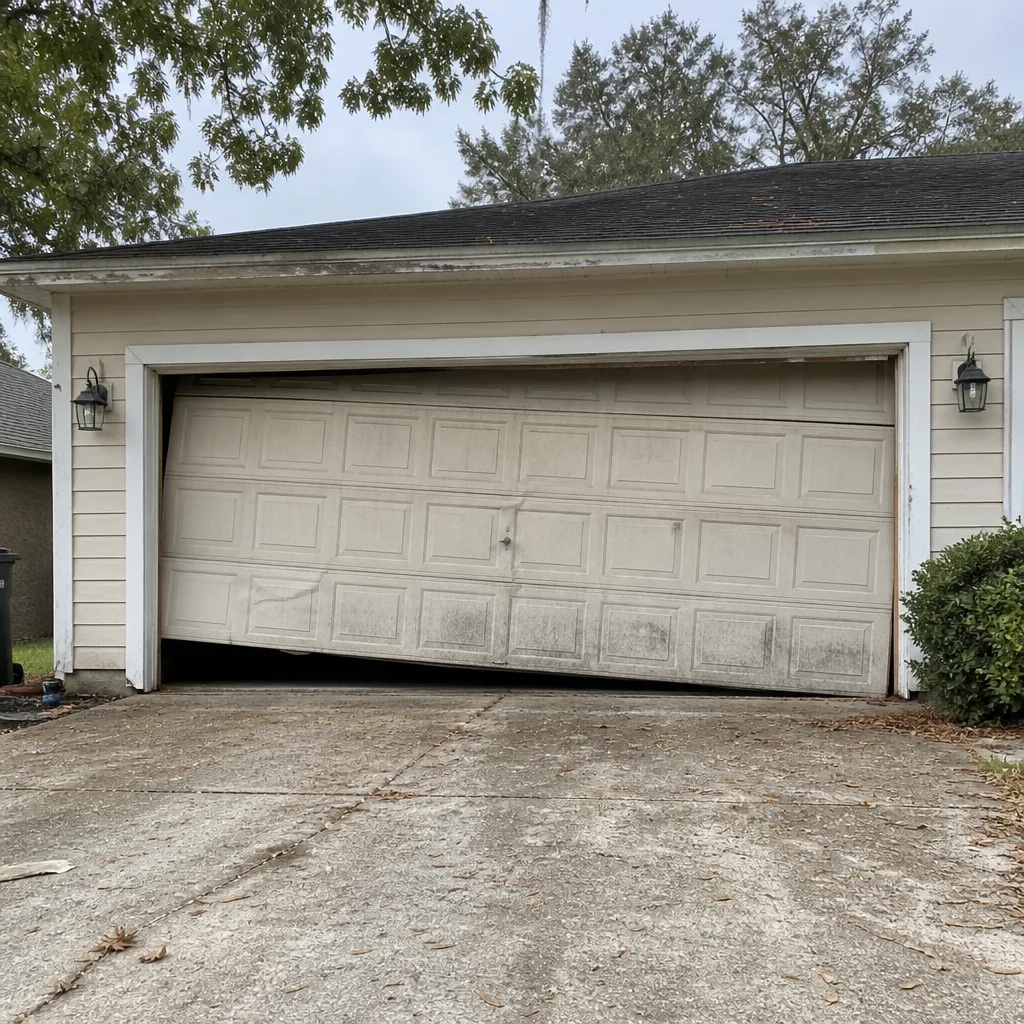 Before
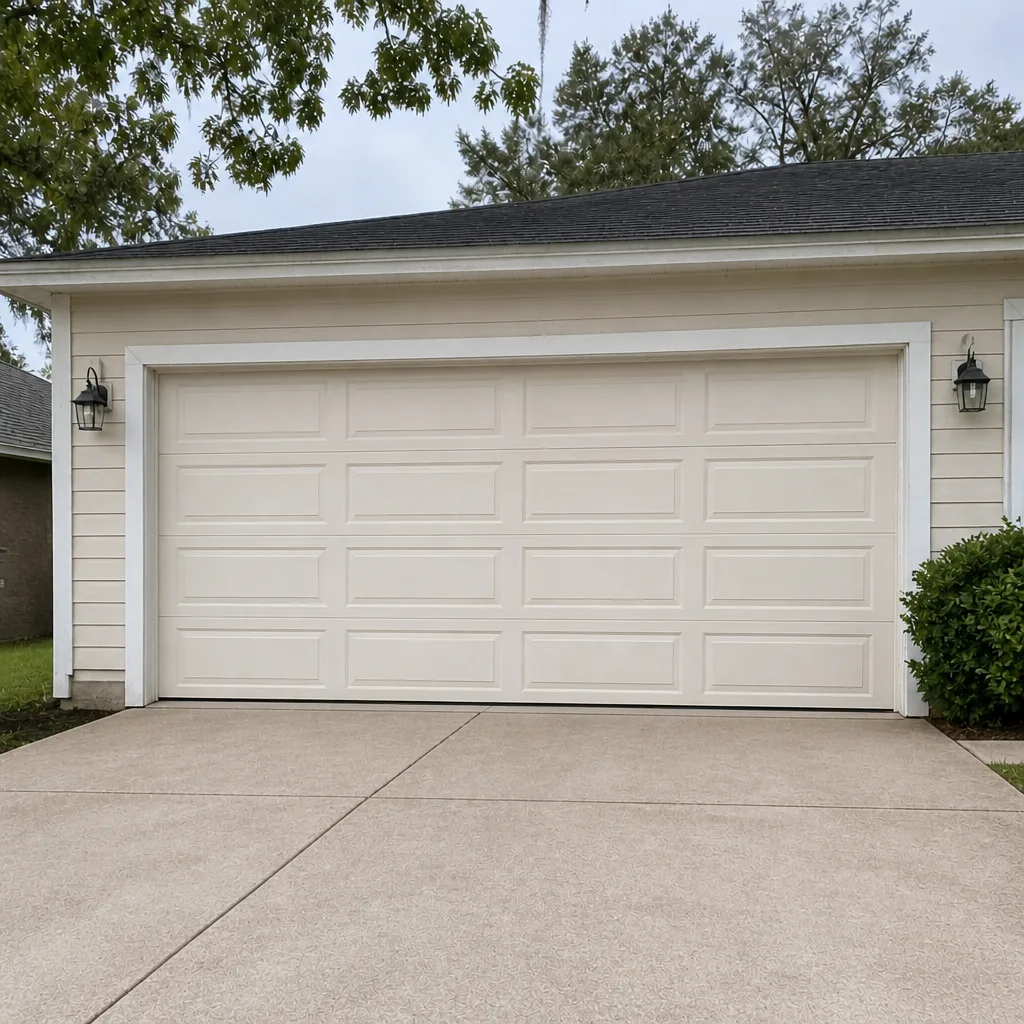 After
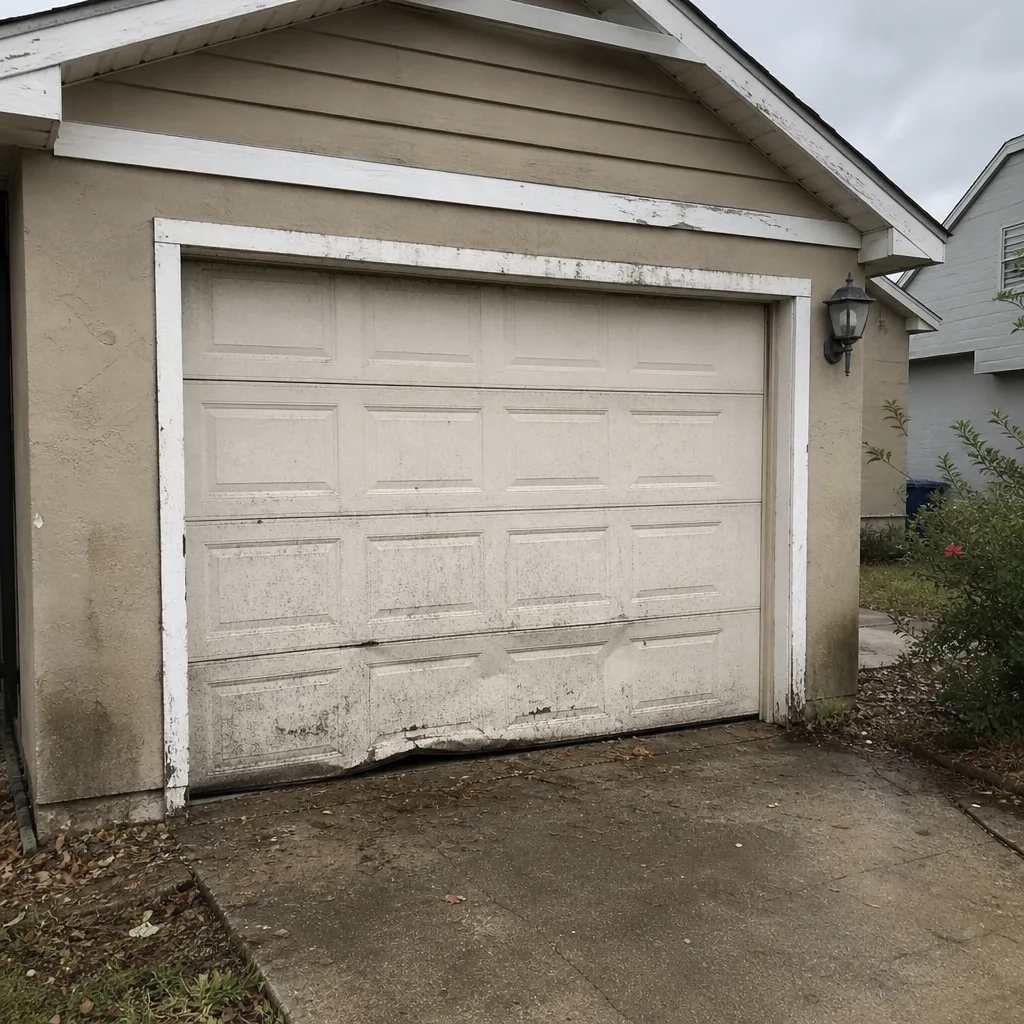 Before
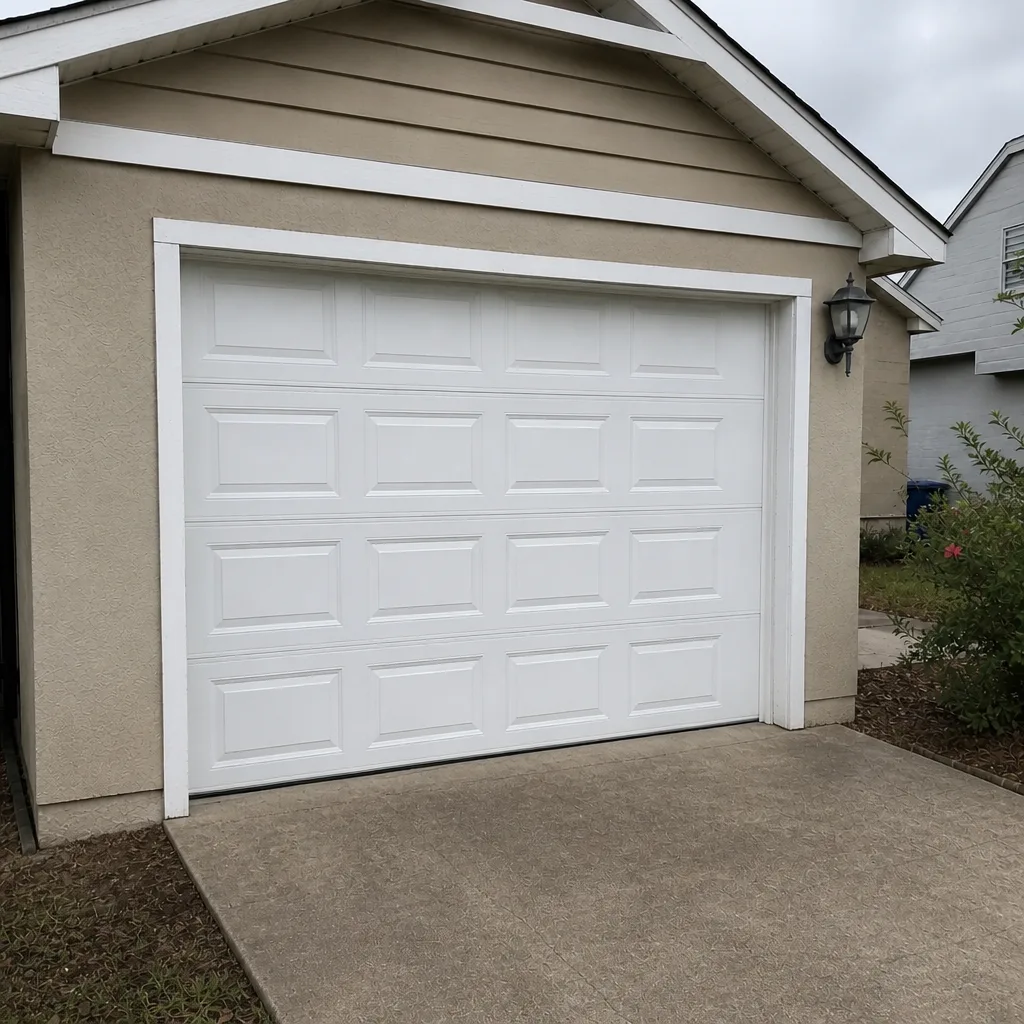 After
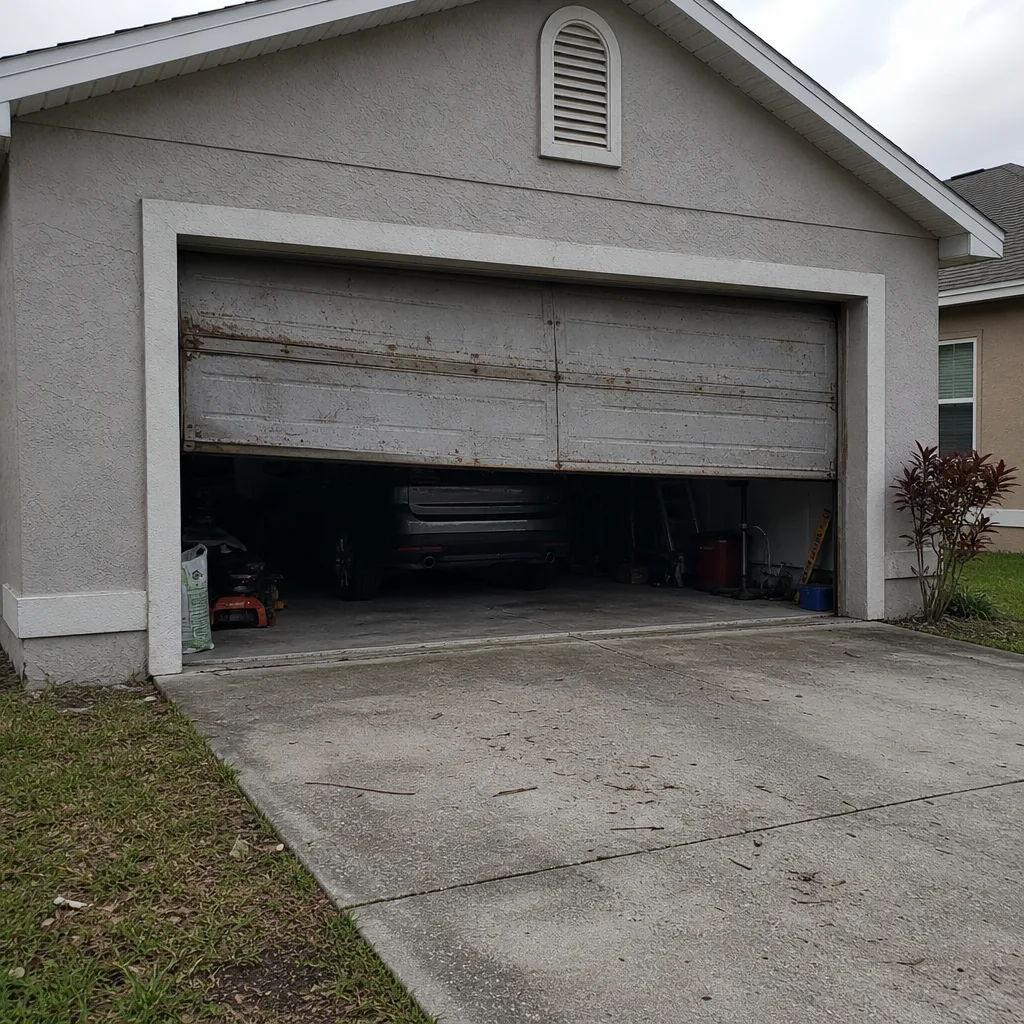 Before
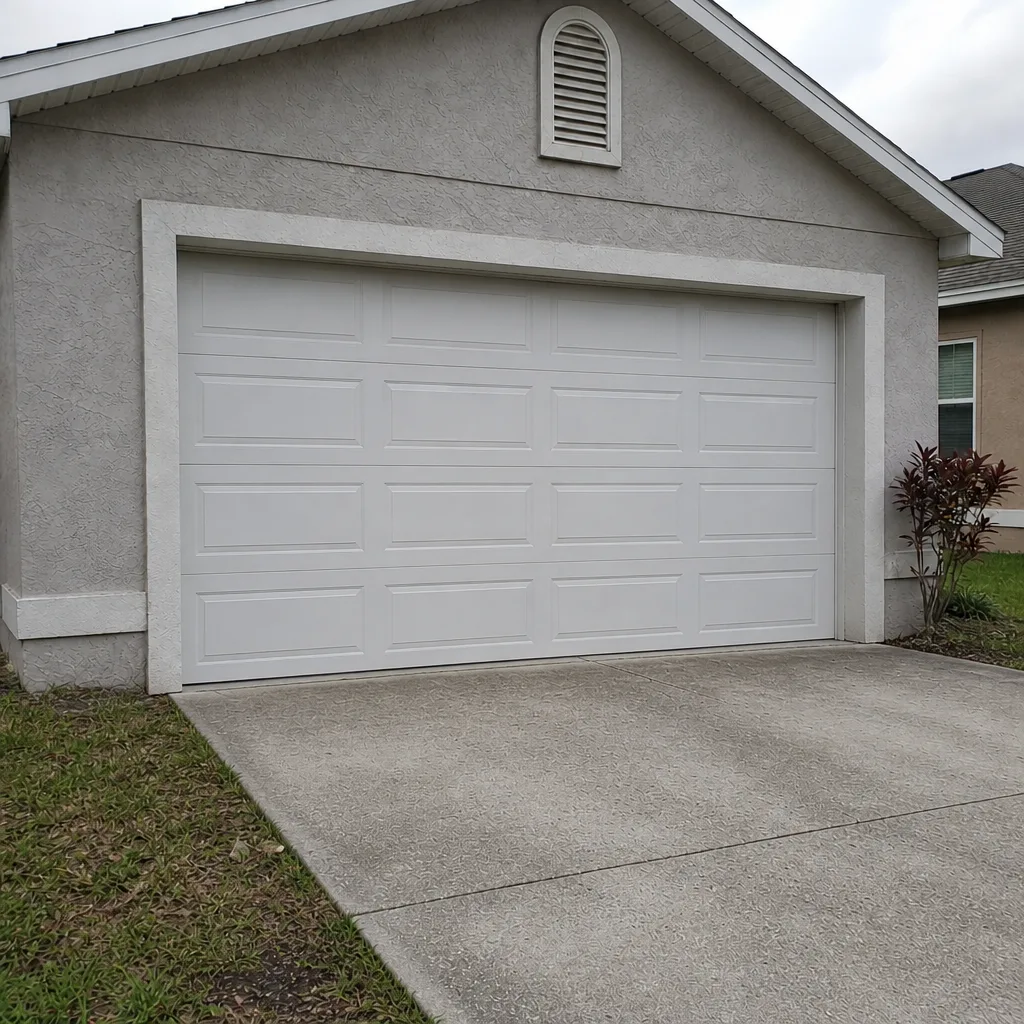 After
When to Call a Professional
Call us if the door won’t lift, if a spring or cable is obviously broken, if the door comes off its tracks, if it reverses without an obstruction, or if any Tier 2 symptom has been hanging around for more than ten days. Call us also if you’re not sure – a free estimate will tell you exactly where it stands. If the door is 10 to 15 years old and has never been serviced, it’s worth a visit before a spring fails under tension. For homes further out toward Pasco or northern Hillsborough, we’re close enough to make a scheduled visit quick.
Wesley Chapel Garage Door Repair Co offers free estimates in Wesley Chapel – call (855) 337-1134. If your door is down and can’t wait, our emergency service is one of the core things we do. For routine fixes, our Wesley Chapel Garage Door Repair Co team keeps the job simple: diagnose the problem, quote the fix in writing, do the work.
Frequently Asked Questions
The most common sign is a loud bang from above followed by a door that suddenly feels extremely heavy and won’t lift more than a few inches. Another clear sign is a visible gap between the door and the ground on one side. If you’re unsure, do the hand-lift test with the opener disconnected – if the door feels like it’s been weighted down, treat it as a broken spring and call. Call (855) 337-1134 for a free estimate.
Grinding during travel usually means worn rollers, dry or seized bearings, or a torsion bar rubbing. It’s rarely dangerous on its own, but the friction is slowly wearing out parts and can escalate. Book a repair visit within a week. Call (855) 337-1134 for a free estimate.
No, and we strongly recommend against trying. Torsion and extension springs hold hundreds of pounds of stored force, and the tools and technique required are specific to the trade. About the only safe step a homeowner can take is to stop using the door and call for a professional. Call (855) 337-1134 – estimates are free.
Random opening or closing is usually a safety sensor issue, a misaligned travel limit, a wall control fault, or – on a smart opener like a LiftMaster or Chamberlain – a Wi-Fi hub or app trigger. It’s not a sign to ignore, because a door moving on its own is a genuine hazard. Unplug the opener until a technician has looked at it. Call (855) 337-1134.
Once a year for most homes, and twice a year if the door gets heavy daily use or you’ve seen rust or seal issues. A service visit covers lubrication, track alignment, spring inspection, and a safety-reverse test. It’s the cheapest way to avoid a spring failure at the worst possible time. Call (855) 337-1134 for a free estimate.
Do the hand-lift test to tell. If the door is hard to lift by hand, the springs are the cause and it’s a safety concern. If it lifts easily and the opener still strains, the motor or drive is the issue. Either way, book a visit. Call (855) 337-1134 – estimates are free.
The Bottom Line
Warning signs aren’t all the same weight. A rattle or a rusty hinge is a “monitor.” A grinding track or a slow door is a “schedule this week.” A broken spring, snapped cable, or door off its tracks is a “stop using it and call today.” Sort every symptom into one of those three tiers before you do anything else, and you’ll make the right call most of the time. In Wesley Chapel, keep an eye out for Florida-specific wear – mineral stains on tracks, rust on cables, UV-cracked seals – and remember the monthly check. Our technicians have up to 8 years of experience, we work on the brand installed in your home, and repair and installation live in the same place. If a sign has been there for more than a week, don’t wait for it to fail. Call (855) 337-1134 for a free estimate. We answer 24/7. Fast dispatch from 7am to 7pm, Sunday through Friday, closed Saturday.
Written by the team at Wesley Chapel Garage Door Repair Co.